

Key Points
Summary
The stock market has reached record highs, with the S&P 500 and Nasdaq Composite posting significant weekly gains of 1.5% and 1.3%, respectively, while the Dow Jones Industrial Average rose 1%. Investors are gearing up for a critical week on Wall Street, featuring a Federal Reserve meeting, the July jobs report, and earnings from Big Tech giants like Apple, Amazon, Microsoft, and Meta. Economic data releases, including the second quarter GDP estimate and the Fed's preferred inflation gauge (core PCE), will also shape market sentiment. Despite expectations of no rate cut in July, markets are pricing in a potential cut by September. Corporate earnings are strong, with the S&P 500 on track for 6.4% growth this quarter, bolstered by optimistic forecasts for future years. Additionally, speculative trading has surged, raising questions about market sustainability, though near-term equity returns remain promising according to Goldman Sachs. This confluence of events underscores a pivotal moment for investors as they navigate economic indicators, policy decisions, and corporate performance to start August.

Key Points
Summary
President Trump recently announced a $550 billion investment from Japan into the US as part of trade negotiations to reduce tariffs, with potential funding directed toward a Taiwanese chipmaker, likely TSMC, for building US plants. TSMC had already pledged $100 billion for this purpose, including facilities in Arizona. The US-Japan deal imposes a 15% tariff on imports, though profit-sharing terms remain contentious. Meanwhile, Trump is navigating trade talks with the EU, India, Canada, and China, setting tariffs between 15% and 50%, and has finalized agreements with the Philippines and Indonesia at 19% tariffs. Additionally, South Korean firm LG Electronics is bracing for US tariffs starting August 1, with plans to adjust prices and shift production, as consumers preemptively purchase appliances. Trump's trade policies continue to reshape global economic dynamics, influencing supply chains and market uncertainties.

Key Points
Summary
President Trump's trade policies have significantly altered the landscape of U.S. import taxes, with a recent deal on July 23 imposing a 15% tariff on Japanese goods, up from 1.6% pre-presidency. Markets reacted positively, with the S&P 500 hitting a record high, as the rate was lower than the feared 20-25%. Overall, Trump's tariffs have raised the average import tax from 2.5% to 20%, impacting countries like China (34-40%) and generating an estimated $290 billion annually, offsetting much of a $375 billion tax cut. While Wall Street cheers the clarity, as tariffs align closer to initial 10-15% forecasts, economic concerns loom with slowing growth, declining corporate profits, and potential inflation. Trump's approval rating hovers near a second-term low of 45%, though tariff effects remain less felt by the public compared to other controversies. However, these tax hikes on businesses and consumers are real and may soon become more noticeable, potentially shifting public and market sentiment.

Key Points
Summary
A recent Investment Company Institute (ICI) report brings good news for retirement savers: the average expense ratios for equity mutual funds in 401(k) plans have hit historic lows, dropping from 0.76% in 2000 to 0.26% in 2024. This reduction, though seemingly small, has a significant impact over time; for a $25,000 balance growing at 7% over 35 years, a 0.5% higher fee could cost over $37,000 in retirement savings. Target-date funds, a favored retirement vehicle, also saw fees decline from 0.67% in 2008 to 0.29% now. ICI’s Sarah Holden emphasized that this decades-long trend of declining fees benefits investors planning for their financial future. However, uncovering these fees can be tricky, though employers must provide disclosure notices, and tools like FINRA’s fund analyzer assist in transparency. The report underscores the importance of low-cost options like index funds to maximize retirement savings, as fees—whether direct or indirect—reduce investment returns and ultimately impact the money available for retirement.

Key Points
Summary
President Trump provided updates on multiple trade negotiations, expressing cautious optimism about a potential EU deal with a "50-50" chance ahead of the August 1 deadline, as European Commission President Ursula von der Leyen prepares to meet him in Scotland. Meanwhile, a recently announced US-Japan trade agreement, involving a $550 billion investment and 15% tariffs, is already strained over profit-sharing disputes. Trump also outlined a broader tariff strategy, setting rates between 15% and 50% for various partners, with new 19% tariffs on imports from the Philippines and Indonesia. Negotiations with Canada appear stalled, with Trump considering a 35% tariff on non-agreement goods, while talks with China show progress toward a deal. Additionally, Trump highlighted upcoming beef exports to Australia and ongoing tariff impacts on businesses like Boston Beer Company, which is managing costs through price increases. These developments reflect Trump's aggressive trade stance, aiming to reshape global economic relationships through tariffs and strategic investments, though challenges and disagreements persist across multiple fronts.

Key Points
Summary
President Trump made an unprecedented visit to the Federal Reserve on July 24, 2025, touring the $2.5 billion renovation project of the Marriner Eccles and East Buildings with Chairman Jerome Powell. The visit, marked by a public spat over costs—Trump cited a $3.1 billion figure, which Powell corrected as including a previously renovated third building—highlighted ongoing tensions over the project's expense. Trump also pressed Powell for lower interest rates, though he distanced himself from firing the Fed chair, focusing instead on project oversight. Accompanied by Republican senators and aides, Trump critiqued the "luxurious" renovations but avoided labeling them a fireable offense. Meanwhile, the Fed defended the high costs, citing security upgrades and unforeseen issues like asbestos. Beyond the visit, Powell faces broader challenges, including calls for internal reviews, lawsuits over transparency, and potential congressional probes from Trump allies. Despite these pressures, the Fed expressed gratitude for Trump’s encouragement to complete the project, which began in 2022 and is set for completion by 2027. This event underscores the intersection of political influence, monetary policy, and public spending scrutiny surrounding the central bank.
Key Points
Summary
This article covers a dynamic week in financial markets, highlighting Tesla's underwhelming quarterly results and Alphabet's strong earnings performance. Attention now shifts to upcoming earnings from tech giants Microsoft and Amazon, alongside a Federal Reserve interest rate decision. A significant focus is on TKO Group, formed by the WWE-UFC merger, following the death of wrestling legend Hulk Hogan at 71 from cardiac arrest. Hogan, a pivotal figure in popularizing wrestling globally during the 1980s, leaves behind a robust WWE business within TKO. The company recently secured a landmark 10-year, $5 billion deal to stream "Raw" on Netflix and reported impressive quarterly growth with a 23% sales increase and 38% rise in operating profits. TKO's stock has surged 57% over the past year, earning bullish ratings from most analysts. The article also notes WWE's potential for further international expansion and a new WWE Network deal in 2026, with earnings set for August 5. Additionally, it touches on broader market drama involving political and economic figures, underscoring a busy period for investors.
Key Points
Summary
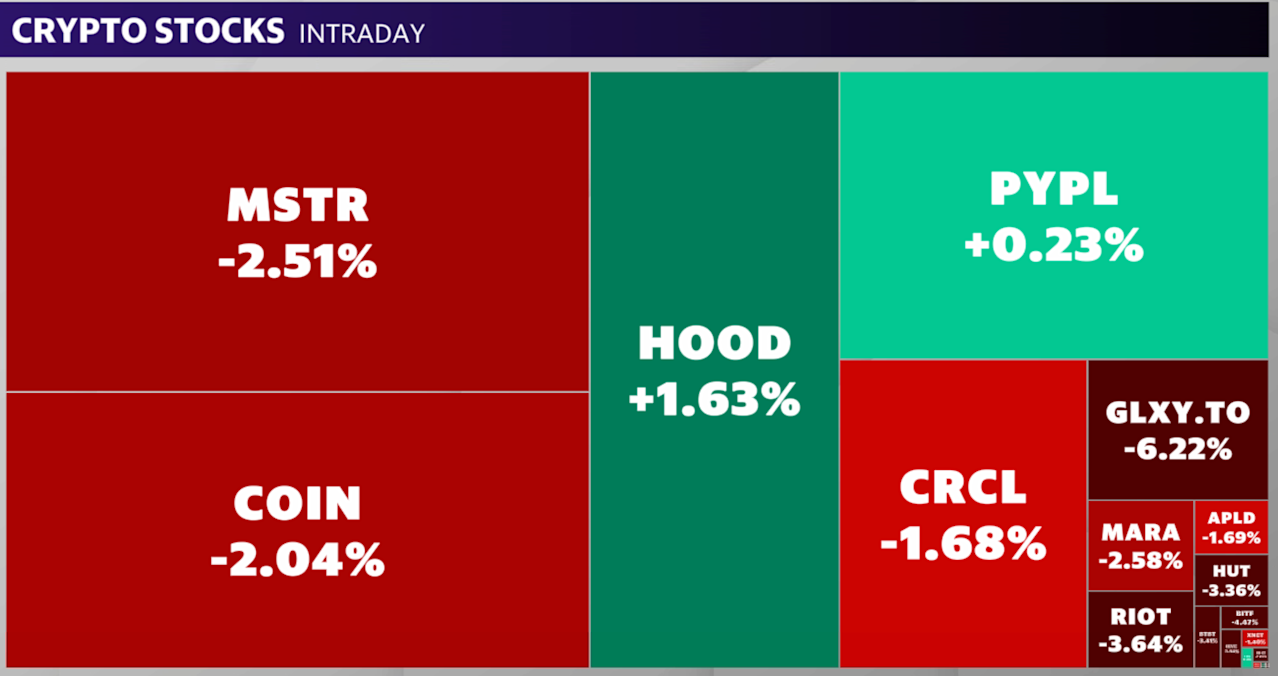
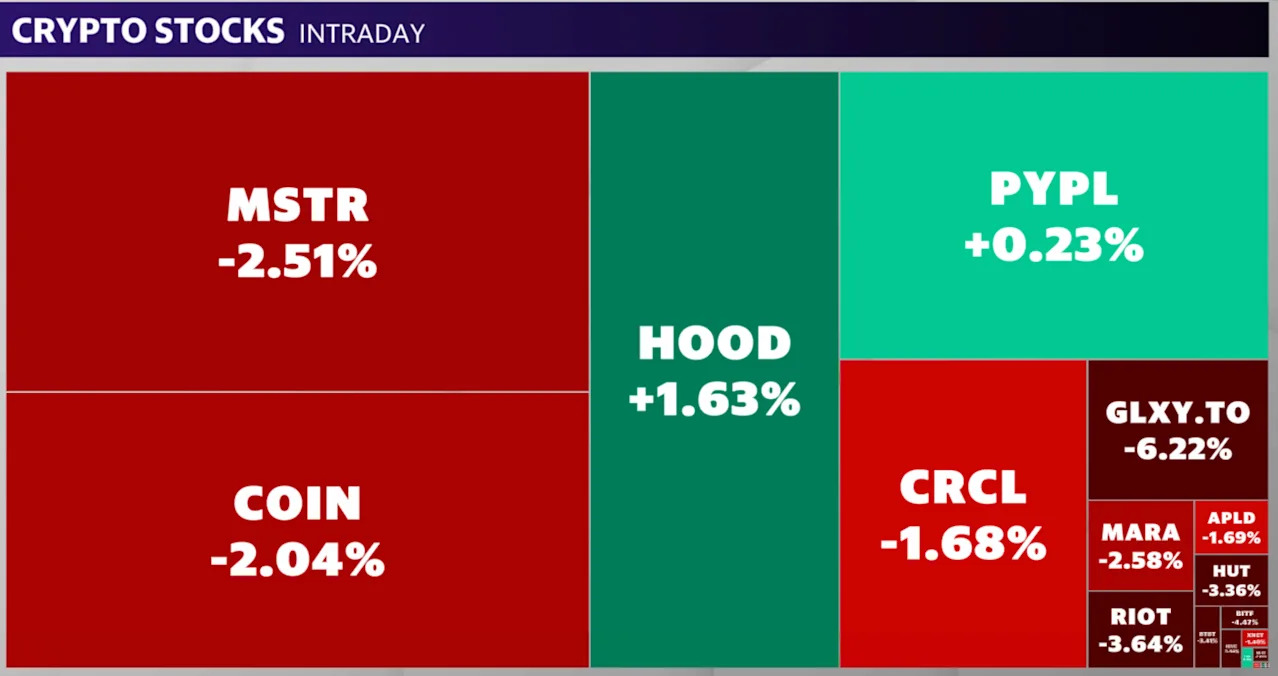
US stocks hovered near record highs on Friday, with the Dow Jones, S&P 500, and Nasdaq each gaining roughly 0.1%, as investors digested a week of major earnings and trade news. A US-Japan trade agreement lifted spirits, though tensions over a $550 billion investment fund's profit-sharing terms and a looming US-EU deal added uncertainty. President Trump's unexpected Federal Reserve visit, initially raising fears of a clash with Chair Jerome Powell, ended with reassurances against dismissal, calming markets. Intel's stock fell despite strong earnings, hurt by layoffs and a pivot to internal manufacturing focus, casting doubt on its recovery. Meanwhile, crypto stocks declined as the US dollar strengthened, and Phillips 66 saw gains from robust refining margins. Investors are now eyeing a critical week ahead, featuring the Fed’s policy meeting, a US jobs report, earnings from giants like Apple and Microsoft, and an August 1 deadline for trade deals to avert tariff hikes. While optimism persists, some on Wall Street question if the rally is driven by FOMO rather than fundamentals, prompting profit-taking ahead of these pivotal events.
Key Points
Summary
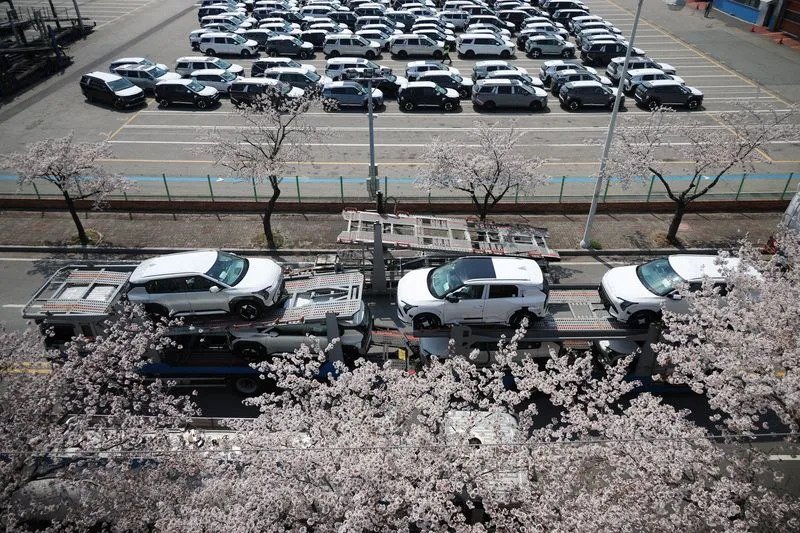
Kia Corp, South Korea's prominent automaker and the world’s third-largest alongside Hyundai Motor, disclosed a substantial financial setback of 786 billion won ($570 million) due to U.S. tariffs in the second quarter of the year. This contributed to a 24% plunge in operating profit, which fell to 2.76 trillion won compared to the same period last year. Despite the profit downturn, Kia managed a 5% rise in U.S. sales, fueled by consumers purchasing vehicles ahead of anticipated price hikes resulting from the tariffs. The company also benefited from robust sales of its new Carnival hybrid SUV during the April to June timeframe. Meanwhile, South Korea is engaging in discussions to delay the imposition of these U.S. tariffs and seeks cooperation in mutual areas. Following the financial report, Kia’s shares dropped by 1.7%, reflecting investor concerns over the impact of tariffs on the company’s profitability.

Key Points
Summary
New U.S. single-family home sales in June grew by a modest 0.6% to an annualized rate of 627,000 units, falling short of economists' expectations of 650,000 units, as reported by the Commerce Department's Census Bureau. This slowdown, attributed to mortgage rates hovering just under 7% for a 30-year fixed-rate loan, has led to an inventory of unsold homes reaching 511,000 units—the highest since October 2007. With a supply duration of 9.8 months, the glut is pressuring prices, with the median new home price dropping 2.9% to $401,800 year-over-year. Builders are increasingly cutting prices to attract buyers, a trend noted in a recent National Association of Home Builders survey. Regionally, sales rose in the South and Midwest but plummeted in the Northeast and West. Meanwhile, the Federal Reserve, having cut rates three times in 2024, is expected to maintain its benchmark rate between 4.25%-4.50% at its upcoming meeting. Economic concerns, including potential inflation from protectionist trade policies, alongside declining homebuilding and permits, suggest residential investment will continue to drag on GDP growth in the second quarter.
Key Points
Summary
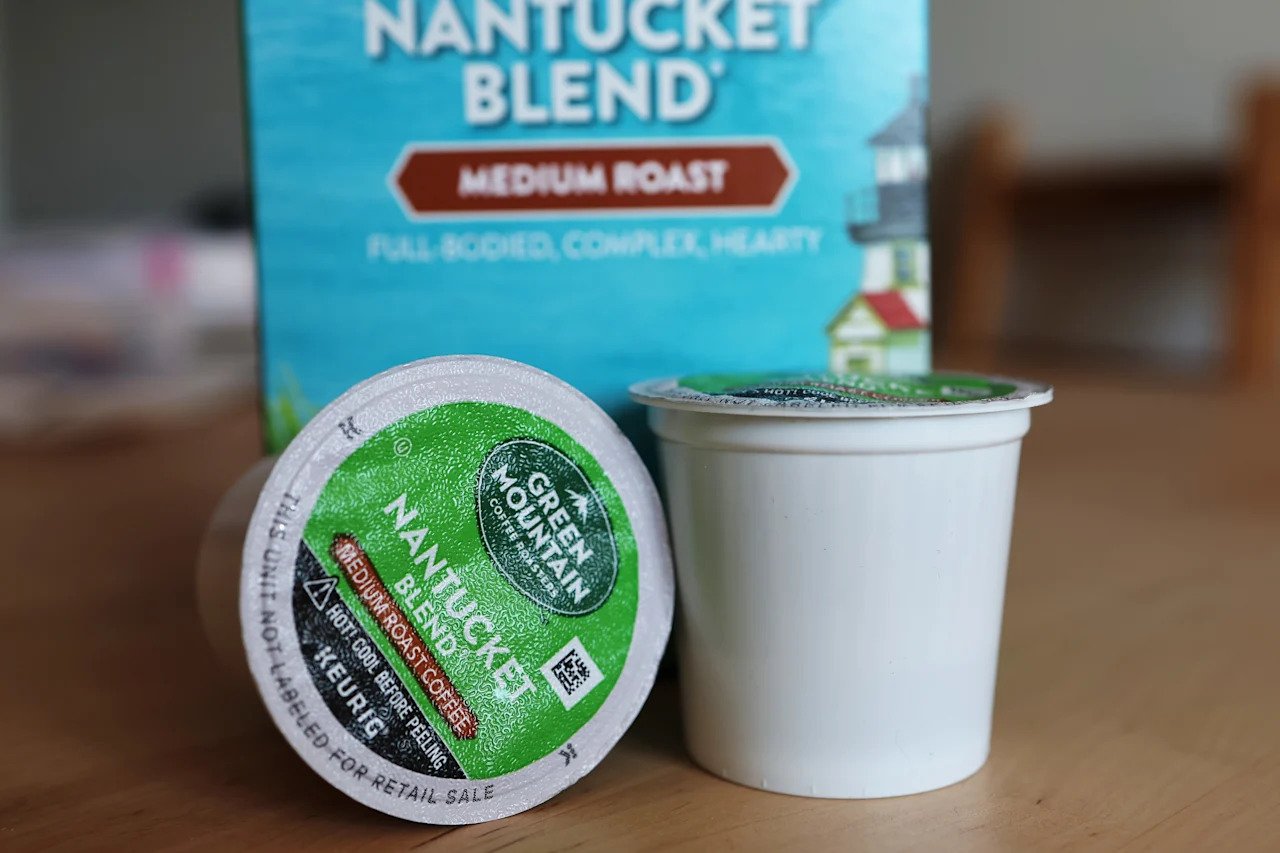
President Trump has introduced a new tariff baseline of 15% to 50% for US trading partners, with higher rates for less cooperative nations, as announced at an AI summit in Washington, DC. This shift from the previous 10% rate coincides with progress on trade deals, including a 15% tariff agreement with Japan, which also involves a $550 billion investment in the US. A similar deal with the EU is nearing completion, potentially at 15% instead of the threatened 30%, though the EU has prepared retaliatory tariffs on over $100 billion of US goods if negotiations fail. Additional agreements with the Philippines and Indonesia set tariffs at 19%, with favorable terms for US exports. Meanwhile, potential deals with India and Canada face higher proposed tariffs of 25% to 35%. The tariffs are already impacting industries, with Brazil's citrus sector reeling from a possible 50% rate and Keurig Dr. Pepper reporting a 22% drop in brewer sales due to tariff-related pressures and commodity inflation. These trade policies are creating global economic ripples, influencing prices, production, and business strategies even before full implementation.

Key Points
Summary
A critical security vulnerability in Microsoft’s SharePoint servers has led to a sharp rise in cyberattacks, with over 400 organizations compromised, a six-fold increase in days, as reported by Eye Security. Predominantly affecting US entities, the breaches also span Mauritius, Jordan, South Africa, and the Netherlands, impacting key institutions like the US National Nuclear Security Administration and the National Institutes of Health. Microsoft has pointed to Chinese state-sponsored groups, including Linen Typhoon and Violet Typhoon, as culprits, escalating US-China cybersecurity tensions. The flaws enable hackers to steal access keys and infiltrate networks, though patches have been issued. Experts caution that the actual victim count may be underreported, with potential for deeper espionage across government, education, and tech sectors worldwide. While no data breaches are confirmed, the US and affected nations are collaborating with Microsoft to mitigate risks. This incident underscores ongoing global cybersecurity challenges and the sophisticated nature of state-backed hacking campaigns.

Key Points
Summary
President Donald Trump has signaled a tougher stance on trade by setting a minimum tariff rate of 15%, up from a previously mentioned 10%, with potential rates reaching 50% for some countries, as part of his reciprocal tariff policy ahead of an August 1 deadline. Speaking at an AI summit in Washington, Trump outlined plans to impose duties on nearly all US trading partners, with over 150 countries receiving tariff notifications. While smaller nations in Latin America, the Caribbean, and Africa may face a 10% baseline, larger economies are under pressure to negotiate. Japan recently secured a reduction from 25% to 15% by easing restrictions on US products and supporting a $550 billion investment fund, with South Korea and the Philippines pursuing similar deals. The European Union and India are also pushing for agreements to mitigate tariff impacts. Trump has downplayed extensive negotiations, framing tariff letters as "deals," though he remains open to lowering rates for countries that expand market access for American businesses. Meanwhile, Vietnam fears a drastic reduction in US exports—potentially by a third—if higher tariffs take effect, underscoring the global economic stakes. These policies reflect Trump's aggressive approach to reshaping trade relationships, with significant implications for international commerce.
Key Points
Summary
The European Union has threatened to impose 30% tariffs on over $100 billion of US goods, including Boeing aircraft and whiskey, if no trade deal is reached by August 1, in response to potential US tariffs of the same rate. Meanwhile, President Trump announced new trade agreements with Japan, the Philippines, and Indonesia, featuring significant investments and reduced tariffs on US exports, with Japan committing $550 billion. Trump also advocated for zero tariffs on US goods in exchange for market access, as tensions rise with larger trade partners like the EU, India, and Canada, where he has threatened tariffs of 25% to 35%. Detroit automakers criticized the US-Japan deal for favoring Japanese imports over North American ones, while European auto stocks rallied on hopes of similar deals. However, trade uncertainties negatively impacted companies like SAP, despite strong cloud revenue growth. The global trade landscape remains volatile as Trump plans to set blanket tariff rates for over 150 smaller trade partners and as ships rush to US ports to avoid impending tariffs on goods like copper.
Key Points
Summary
GoPro (GPRO) and Krispy Kreme (DNUT) have emerged as the latest focal points in a meme stock resurgence dominating markets this summer. On Wednesday, GoPro's stock surged up to 90% in premarket trading before settling at a 40% gain, while Krispy Kreme rose as much as 70% before moderating to a 26% increase. This follows significant rallies for Opendoor (OPEN) and Kohl's (KSS) earlier in the week, though both saw declines exceeding 10% on Wednesday. Despite the hype, both GoPro and Krispy Kreme reported revenue drops in Q1 2025, with GoPro down 13% to $134.3 million and Krispy Kreme down 15% to $375.2 million. GoPro, once a high-flying stock post its 2014 IPO, has lost nearly 98% of its value, while Krispy Kreme's stock remains above $5 after a pandemic peak. Unlike other meme stocks with high short floats, GoPro's is under 10%, compared to Krispy Kreme's 28%, Opendoor's 21%, and Kohl's 49%. This retail investor-driven frenzy echoes the 2020-2021 GameStop rally, with both companies set to report earnings in August.

Key Points
Summary
Tesla (TSLA) faces significant challenges as it approaches its Q2 2025 earnings report, with stock down 18% year to date amid a rocky relationship between CEO Elon Musk and President Trump, impacting late-2024 optimism. The core auto business, Tesla’s primary revenue source, is under pressure with expected Q2 revenue of $22.79 billion, a 9% drop, and a 13.5% decline in global deliveries. Regional weaknesses, competition, and consumer shifts to hybrids add to concerns. Meanwhile, Musk’s focus on robotaxis offers hope, with testing expanding in Austin, though Tesla trails competitors like Waymo and Uber. Investors are eager for updates on a cheaper EV, promised at around $30,000, but delays to Q4 2025 seem likely, potentially disappointing stakeholders. Additionally, tariffs on foreign cars, Musk’s political reputational hit, and the possibility of a future share sale to fund autonomous vehicle and AI initiatives further cloud Tesla’s outlook. As the S&P 500 and Nasdaq hit new highs, Tesla’s earnings call will be critical for insights into its struggling auto segment, robotaxi plans, and new vehicle timelines.


