


Key Points
Summary
Chainlink (LINK) has introduced a new Automated Compliance Engine (ACE), a modular tool for token issuers to ensure regulatory adherence, reinforcing its position as a leading data oracle securing over $45 billion in on-chain value. Meanwhile, XRP (Ripple) focuses on native compliance at the protocol level, appealing to institutional investors with features like wallet exclusion and asset freezing, hosting $160.2 million in tokenized assets. Contrary to concerns, Chainlink's latest move does not threaten XRP; instead, their roles are complementary—Chainlink as middleware for data and compliance, and XRP as a settlement layer. This synergy could enhance the XRP Ledger by providing compliant data oracles. Both cryptocurrencies address the critical need for compliance in the growing tokenized asset market, projected to reach trillions in value. As regulatory scrutiny intensifies globally, their tools position them to facilitate institutional adoption, with Chainlink funneling data into smart contracts and XRP offering regulator-friendly transaction capabilities. The expanding crypto pie suggests room for both to thrive without direct competition.

Key Points
Summary
The article explores whether the cryptocurrency market is currently in a bubble, given Bitcoin's price nearing $117,000 and significant gains in altcoins like Solana, Ethereum, and XRP since mid-2023. Unlike the 2021 bubble, driven by retail mania, today's market shows institutional demand, with U.S. spot Bitcoin ETFs amassing $50 billion. Fundamentals appear aligned with pricing, as utility on leading chains grows—Solana's DeFi applications and XRP's institutional tools generate real revenue. Macroeconomic tailwinds, such as potential Federal Reserve rate cuts, could further support valuations. Notably, classic bubble indicators like retail euphoria, high leverage, and public frenzy are missing; sentiment is greedy but not manic, and web searches for Bitcoin remain low. On-chain data suggests holders are in profit without pressure to sell, and leverage is below 2021 peaks. While sentiment could overheat soon due to favorable policies and institutional inflows, the market currently appears warm rather than frothy. The article advises investors to monitor key indicators to avoid timing mistakes, emphasizing that bubble talk may be premature despite the "crypto bubble 2.0" narrative.
Key Points
Summary
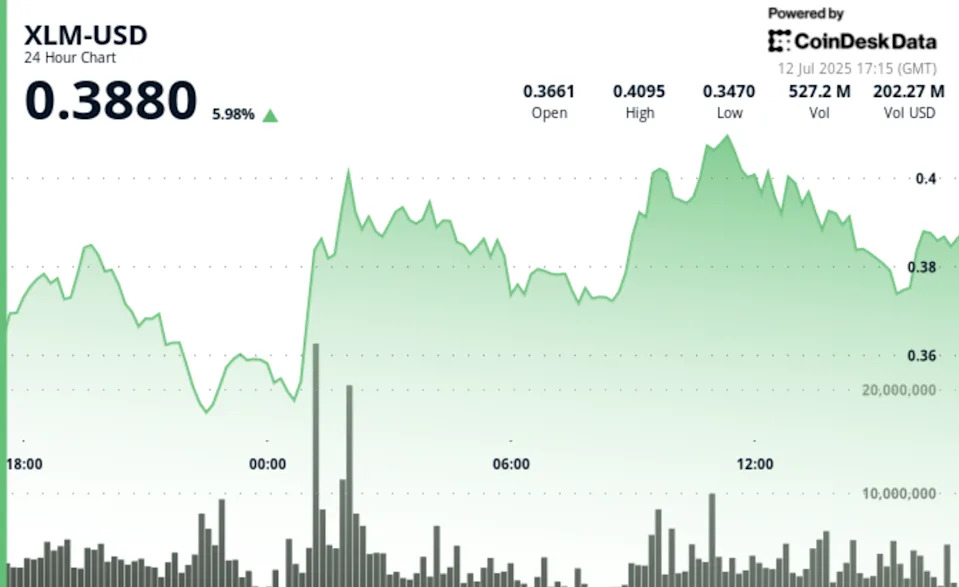
PayPal announced on June 11 its intention to launch PayPal USD (PYUSD), a U.S. dollar-backed stablecoin, on the Stellar blockchain, pending approval from the New York State Department of Financial Services. This move would expand PYUSD’s availability beyond Ethereum and Solana, leveraging Stellar’s low-cost, high-speed payment network to enhance accessibility for payments, cross-border transfers, and financial services in over 170 countries. The integration aims to improve daily payment options and provide financing tools like working capital for small businesses, supported by Stellar’s global infrastructure. PayPal’s vice president for digital currencies, May Zabaneh, emphasized the potential for blockchain in cross-border payments, while Stellar’s CEO, Denelle Dixon, highlighted benefits for emerging markets. PYUSD, issued by Paxos Trust Company, maintains a $1.00 redemption value, backed by cash reserves. Additionally, Stellar’s XLM token experienced a 14.77% price surge in a 24-hour period, with significant trading volume and volatility, reflecting strong market interest. Technical analysis indicates support and resistance levels that could influence future price movements.

Key Points
Summary
The value of coins, like any asset, hinges on market demand, with rarity often driving prices higher due to limited supply from age, small mint runs, or unique errors. Error coins, which can fetch six-figure sums, are categorized into planchet errors (issues with the blank metal), die errors (mistakes in design elements), and strike errors (misaligned impressions). Notable examples include the 1943 Copper Lincoln Penny, valued over $1 million due to a wartime minting mistake, and the 1975 No S Proof Roosevelt Dime, worth $450,000 for lacking a mintmark. Other high-value coins are the 1955 DDO Lincoln Penny ($125,000+), 1942/1 Overdate Mercury Dime ($120,000), and 1937 Three-Legged Buffalo Nickel ($100,000). Spotting these treasures requires patience, a sharp eye, and knowledge of famous errors, as top prices are reserved for coins in mint or near-mint condition. Researching specific misprints and their characteristics is crucial for collectors hoping to uncover a valuable piece.

Key Points
Summary
Cryptocurrency investors are increasingly receiving IRS letters warning about potential inaccuracies in their tax filings related to virtual currency transactions. According to Fortune, the number of related support conversations on CoinLedger surged nine-fold in May and June compared to the previous year, with thousands of investors seeking guidance. The IRS issues three types of letters: 6173, which requires action if filing requirements are unmet, and 6174 and 6174-A, which are informational but prompt a review of filings. For a 6173 letter, taxpayers may need to file delinquent or amended returns or contest the letter with supporting documentation if they believe it’s an error. Letters 6174 and 6174-A don’t require a response, but investors should verify their Form 1040 filings and watch for further IRS correspondence. This surge in IRS scrutiny highlights the importance of accurate reporting of crypto transactions to avoid penalties or further action.
Key Points
Summary
The ARK 21Shares Bitcoin ETF (ARKB) provides a convenient way to invest in Bitcoin without the complexities of direct ownership, as it can be traded on traditional stock platforms. This ETF closely mirrors Bitcoin’s price movements, though it comes with unique quirks due to its smaller size. Expert predictions on Bitcoin’s future are polarized, with bullish forecasts from Michael Saylor and Cathie Wood (who manages ARK Invest) projecting massive growth by 2030, while skeptics like Warren Buffett dismiss it as a valueless fad. The article highlights the advantages of ETFs over direct crypto holdings, including ease of trading, potential tax benefits, and avoiding technical issues like wallet security. Comparing ARK 21Shares to competitors like iShares Bitcoin Trust, it offers a lower share price for finer investment control and a slightly lower fee (0.21% vs. 0.25%). While differences among Bitcoin ETFs are minor, they may influence portfolio decisions. The author anticipates the ETF will track Bitcoin’s upward trend over the next five years, despite ongoing debates about its long-term value.
Key Points
Summary
Binance has introduced Sharia Earn, the world’s first Sharia-compliant crypto staking service, targeting the $4 trillion Islamic finance market. Certified by Amanie Advisors, this innovative platform addresses long-standing concerns within the Muslim community about the compatibility of decentralized assets with Islamic principles, such as avoiding riba (interest) and gharar (uncertainty). Available in over 30 countries, including Indonesia and Saudi Arabia, Sharia Earn allows users to stake BNB, ETH, and SOL under halal guidelines using the Wakala contract. Binance CEO Richard Teng highlighted the service’s role in empowering the 1.9 billion-strong Muslim community to participate in the crypto revolution. Built on Binance Earn’s infrastructure, Sharia Earn combines institutional-grade technology with religious compliance, demonstrating how DeFi can adapt to cultural and spiritual needs. As crypto adoption grows in the developing world, such localized offerings could be key to enhancing financial inclusivity.

Key Points
Summary
GFT is introducing a specialized program to aid US banks in launching stablecoin products, capitalizing on the recent passage of the GENIUS Act in the US Senate, which signals a forthcoming federal regulatory framework for stablecoins. This framework mandates reserve backing for stability and outlines issuance and governance rules, reducing risks for banks. With a proven track record in decentralized finance across Latin America, Europe, and Asia, including collaborations with Standard Chartered Bank and Deutsche Bank, GFT is well-positioned to guide US banks in selecting and integrating technologies within existing systems like Thought Machine. The program ensures compliance with current and future regulations while enabling scalability for increasing transaction volumes. Stablecoins promise faster, cheaper transactions for internal and B2B payments, with potential for broader applications. GFT’s Christopher Ortiz emphasizes that banks delaying stablecoin adoption risk losing competitive edge and customers to more innovative peers, highlighting the urgency of engaging with this emerging financial technology.

Key Points
Summary
Exchange-traded funds (ETFs) have surged in popularity due to their simplicity and low fees, allowing investors to diversify with a single investment. This article compares two prominent Vanguard ETFs: the Value ETF (VTV) and the Growth ETF (VUG). VTV focuses on undervalued stocks, providing a safer investment with a 2.2% dividend yield and a low expense ratio of 0.04%, appealing to cautious investors seeking stability. In contrast, VUG targets high-growth companies, offering superior long-term returns (e.g., 16.77% average annual return over 15 years) but with higher volatility, as seen in its 2022 drop of 33.15% and 2023 rebound of 46.83%. It also has a 0.04% expense ratio but a lower dividend yield of 0.45%. The article highlights the risk-reward trade-off, noting VUG’s concentration in tech giants like Microsoft and Nvidia, while VTV holds steadier names like Berkshire Hathaway. Both ETFs are solid, low-cost options, and the choice depends on an investor’s risk tolerance and goals. The author expresses a preference for VUG due to its growth potential, while acknowledging VTV’s appeal for stability.

Key Points
Summary
As cryptocurrency, particularly Bitcoin, reaches new highs, retirees are increasingly debating its role in retirement portfolios amid rising inflation and living costs. This article from GOBankingRates explores both the potential benefits and significant risks of including crypto in retirement planning. On the positive side, crypto offers diversification, as it often moves independently of traditional assets, and may serve as an inflation hedge due to Bitcoin’s limited supply. It also presents high growth potential for legacy building and tax-advantaged growth in retirement accounts like 401(k)s. However, the risks are substantial, including extreme volatility that could wipe out savings, regulatory uncertainty, tax inefficiencies upon withdrawal, and security complexities that many retirees may struggle with. Financial experts urge caution, with conservative allocation recommendations and warnings from entities like the Department of Labor about crypto’s speculative nature. The decision to invest hinges on individual financial stability, risk tolerance, technical competence, and time horizon. Retirees are advised to consult experienced financial advisors and limit exposure to amounts they can afford to lose, balancing the allure of gains against the critical need for retirement security.
Key Points
Summary
This article explores billionaire investor Dan Loeb's recent trading moves as revealed in Third Point's first-quarter Form 13F filing. Loeb completely exited a 500,000-share position in Tesla (NASDAQ: TSLA), possibly capitalizing on gains following political developments, but also likely influenced by Tesla's declining EV margins, unsustainable earnings from regulatory credits, and Elon Musk's history of unfulfilled promises. Tesla's high valuation and competitive pressures further complicate its outlook. Conversely, Loeb invested heavily in Nvidia (NASDAQ: NVDA), acquiring 1.45 million shares of the AI giant, which has seen a staggering 420,000% return since 1999 due to its dominance in GPU technology and innovation. However, Nvidia faces risks of an AI bubble burst and growing competition. The article underscores the importance of 13F filings in revealing Wall Street trends, highlighting Loeb's strategic shifts between a struggling EV leader and a booming AI powerhouse, while cautioning about potential vulnerabilities in both stocks.
Key Points
Summary
A Shanghai regulator recently held a meeting to discuss strategic responses to stablecoins and digital currencies, marking a notable shift in China’s stance despite a nationwide ban on crypto trading since 2021. Organized by the Shanghai State-owned Assets Supervision and Administration Commission, the meeting emphasized the need for greater sensitivity to emerging technologies and enhanced research into digital currencies. Major companies like JD.com and Ant Group are pushing for a yuan-pegged stablecoin to rival U.S. dollar-linked cryptocurrencies and plan to seek licenses in Hong Kong, where stablecoin legislation will take effect on August 1. Shanghai, a key financial hub, often pioneers regulatory changes, and the discussions included global regulatory frameworks, opportunities, and challenges of stablecoins. A policy expert provided insights and suggestions for digital currency development. However, China’s central bank governor has cautioned that the rise of digital currencies poses significant regulatory challenges, reflecting ongoing concerns about financial stability. Meanwhile, stablecoins, known for faster and cheaper transactions, are gaining traction globally, with companies like Amazon and Walmart exploring their potential in the U.S. Bitcoin also reached a record high near $112,000, underscoring the growing popularity of digital currencies worldwide. While China’s approach may evolve, any policy shift is likely to face hurdles given past restrictions and regulatory caution.
Key Points
Summary
Ant Group Co., backed by Jack Ma, is collaborating with Circle Internet Group Inc. to integrate Circle’s USDC stablecoin into its blockchain platform, pending US regulatory compliance, as part of Ant International’s broader push into regulated cryptocurrencies and tokenized assets. This move aligns with growing acceptance of stablecoins, bolstered by recent US Senate legislation setting rules for dollar-pegged digital currencies. Circle, a publicly traded stablecoin issuer, has seen its shares surge over 500% since going public, reflecting market optimism. Ant International, which processed over $1 trillion in transactions last year, is also seeking stablecoin licenses in Singapore, Hong Kong, and Luxembourg. The unit, generating nearly $3 billion in revenue for 2024, shows strong growth potential, especially in treasury services for Alibaba’s e-commerce platforms and external clients. Meanwhile, the broader crypto landscape sees increasing adoption, with companies like PayPal, Walmart, and Amazon exploring stablecoins, despite past setbacks like Meta’s failed attempt. Ant’s blockchain already supports tokenized assets from global banks like HSBC and JPMorgan, highlighting its expanding role in cross-border payments and financial innovation.

Key Points
Summary
WPP, a leading global advertising agency, announced Cindy Rose, Microsoft’s Chief Operating Officer for Global Enterprise, as its new CEO, effective September 1, 2025. Rose succeeds Mark Read, who steps down after seven years, earlier than the initially planned December 31 date. The appointment comes as WPP focuses on integrating artificial intelligence and navigating industry shifts, with Rose’s extensive experience in digital transformation seen as a key asset. Chair Philip Jansen highlighted her ability to guide large organizations through technological changes, which will be vital amid macroeconomic challenges. The news follows a turbulent period for WPP, with its U.S.-listed shares dropping 18% after a lowered full-year outlook due to reduced client spending and economic uncertainty. Despite a slight 1% recovery in share price after the CEO announcement, WPP’s stock remains near a five-year low. Rose expressed optimism about building on WPP’s AI capabilities and maintaining its creative excellence and prestigious client base.

Key Points
Summary
Crypto prices surged on Thursday, with Ether (ETH-USD) up nearly 7% to over $2,780 and Dogecoin (DOGE-USD) gaining 6%, leading a broader rally. Bitcoin (BTC-USD) approached its all-time high of $112,000, while Solana (SOL-USD) and XRP (XRP-USD) also posted gains. The CoinDesk 20 index rose over 2%, reflecting strong market momentum. Santiment's onchain analysis highlighted the absence of retail traders, often a precursor to significant upside as smart money steps in. This rally coincides with supportive risk sentiment and growing political focus on digital assets, including an upcoming U.S. House Committee hearing on July 16, dubbed 'Crypto Week,' aimed at positioning America as the crypto capital. Despite U.S. tariff threats from President Trump impacting some equity markets, global tech stocks like Nvidia, which briefly hit a $4 trillion market cap, and softening Treasury yields suggest a favorable policy environment. Augustine Fan from SignalPlus noted the market's anticipation for regulatory clarity, with a six-month target set by Trump in January, hoping next week’s hearing will provide momentum for a federal framework.
Key Points
Summary
A Polymarket prediction market, which wagered over $240 million on whether Ukrainian President Volodymyr Zelenskyy would wear a suit before July 1, resolved to “No,” leaving traders stunned. Despite multiple media reports and photos showing Zelenskyy in a black suit at the NATO summit, the outcome defied expectations, igniting controversy over how such decisions are made. The market’s rules required credible photographic evidence and media consensus for a “Yes” resolution, yet the final call, determined by UMA’s voter oracle system, went against apparent evidence. Allegations surfaced that a single whale, controlling over 85% of voting power, influenced the result, raising concerns about governance and fairness. This incident has sparked a broader debate about the integrity of prediction markets, with traders questioning whether published rules and resolution logic can be trusted when large sums are at stake. While no wrongdoing by Polymarket has been proven, the event underscores the challenges of subjectivity and power dynamics in decentralized betting platforms.


