

Key Points
Summary
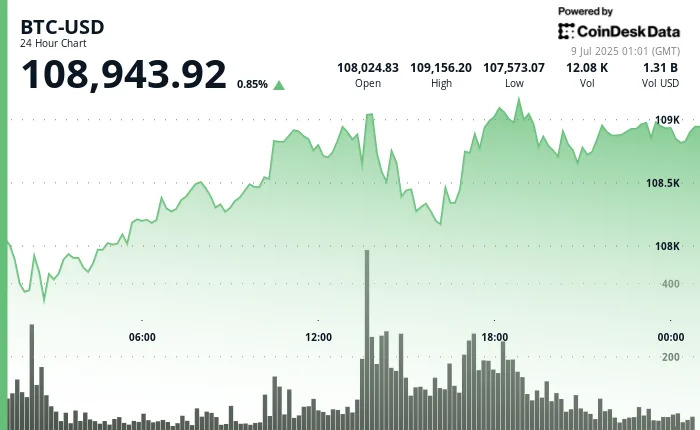
Bitcoin (BTC) remains rangebound above $108,900 as Asia starts Wednesday trading, with the CoinDesk 20 index up 1.7%, though market conviction is lacking to push BTC to $110K. Glassnode reports low spot volumes and reduced ETF flows, while Wintermute describes a “barbell market” with interest split between memecoins (up over 8%) and stable large-caps like BTC and ETH. Meanwhile, last year’s popular AI and DePIN tokens lose traction. Ego Death Capital’s new $100M fund targets Bitcoin infrastructure startups, emphasizing durability over speculation. In legal news, a judge in the Tornado Cash case bars discussion of overturned sanctions in developer Roman Storm’s trial, limits free speech defenses, and admits contested evidence. Market movements show BTC holding above $108K, Ethereum up 3% to $2,610, gold down 1.2%, and mixed Asian markets with the Nikkei 225 slightly lower. Global equities shrug off geopolitical tensions, but BTC’s hesitancy reflects trader caution awaiting clearer signals for a decisive breakout.

Key Points
Summary
This article explores the potential for Bitcoin (CRYPTO: BTC) to become a reserve asset for central banks within the next decade, akin to gold and U.S. Treasuries. Bitcoin's appeal lies in its scarcity, with a fixed supply of 21 million coins and a halving mechanism that reduces inflation over time. Its neutrality offers a hedge against political and economic volatility, while digital transactions provide a faster, cheaper alternative to gold. Infrastructure advancements, such as improved custody solutions and ETF availability following SEC policy shifts, are removing barriers for institutional adoption. Sovereign interest is also rising, with governments holding 2.3% of mined Bitcoin and the Czech National Bank considering a significant allocation. Although challenges like price volatility and potential regulatory crackdowns remain, the article argues that growing liquidity and institutional support make Bitcoin's transition to a reserve asset increasingly likely. For investors, this could mean sustained demand and higher long-term value as central banks adopt a permanent holding mindset similar to gold.

Key Points
Summary
Grant Cardone’s real estate firm, Cardone Capital, has made headlines by purchasing 1,000 bitcoin worth over $101 million, signaling a major pivot towards cryptocurrency integration in its investment strategy. Announced on June 21 via X, this move positions Cardone Capital as a pioneer in blending real estate with bitcoin, with plans to acquire an additional 3,000 bitcoin and 5,000 residential units by year-end. This significant investment, as reported by Cointelegraph and CoinDesk, could influence other traditional finance entities and hesitant investors to explore bitcoin, given the thorough vetting such firms undertake. However, the article emphasizes that bitcoin is still a nascent asset lacking extensive historical data, urging investors to align allocations with personal risk tolerance. While Cardone’s move may be a bullish sign for bitcoin, diversification, expert guidance, and consistent portfolio oversight are recommended to manage potential risks. The decision to invest remains personal, balancing bitcoin with traditional assets like mutual funds and ETFs to suit individual financial goals.
Key Points
Summary
Michael Saylor’s Strategy, formerly MicroStrategy Inc., reported a staggering $14.05 billion unrealized gain in the second quarter, fueled by a Bitcoin price rebound and a recent accounting change that values its holdings at market prices. This gain was offset by a $4.04 billion deferred tax expense. Owning about $65 billion in Bitcoin, Strategy is the largest corporate holder of the cryptocurrency, having acquired $6.8 billion worth in the quarter ending June 30. Saylor has transformed the company into a leveraged Bitcoin proxy through share sales and debt offerings, including a new at-the-market sales program for preferred stock. While Strategy’s Bitcoin strategy has driven a 3,300% stock surge since 2020—outpacing Bitcoin’s 1,000% and the S&P 500’s 115% gains—its core software business is expected to generate just $112.8 million in revenue. The accounting shift, adopted in Q1, has led to significant earnings volatility, with a record $4.2 billion loss reported earlier due to a Bitcoin price drop. Strategy’s focus on Bitcoin continues to overshadow its traditional operations, positioning it alongside giants like Amazon and JPMorgan in terms of operating profit potential for the quarter, with results due in August.

Key Points
Summary
AllUnity, a joint venture between DWS, Flow Traders, and Galaxy, has secured an e-money institution (EMI) licence from Germany’s Federal Financial Supervisory Authority (BaFin). This authorisation allows the company to launch EURAU, a BaFin-licenced Euro stablecoin, designed to comply with the Markets in Crypto-Assets Regulation (MiCAR) framework. EURAU is fully collateralised with proof-of-reserves and aims to enable seamless cross-border settlements for regulated financial institutions, fintechs, and enterprises across Europe and globally. AllUnity’s CEO, Alexander Höptner, highlighted the licence as a crucial step toward creating a secure and transparent digital payment ecosystem. To meet environmental, social, and governance (ESG) standards, AllUnity partnered with Crypto Risk Metrics to ensure regulatory adherence under German oversight. The company also offers 24/7 real-time settlement infrastructure. Its partners bring expertise in asset management (DWS), trading and digital assets (Flow Traders), and institutional crypto services (Galaxy), positioning AllUnity as a leader in compliant digital finance innovation.

Key Points
Summary
Elon Musk has confirmed that his newly launched "America Party" will embrace Bitcoin, declaring fiat currency as "hopeless" in response to a query on X. This announcement, made on July 6, sparked enthusiastic reactions from the crypto community, with leaders like Brandon Turp and Ben Pham praising the move as a potential savior for the nation. Musk's decision to launch the party stems from his dissatisfaction with the U.S. two-party system and a public feud with Donald Trump over legislative issues, despite previously supporting Trump's campaign and leading the Department of Government Efficiency (D.O.G.E.). While Bitcoin's price surged following the news, reaching $109,627.25 from $108,735.07, questions linger about Tesla resuming Bitcoin payments, which were halted in 2021 due to environmental concerns. Additionally, discussions around stablecoins like Tether (USDT), the largest stablecoin with a $159.46 billion market cap, surfaced as a potential means to bolster fiat. Musk's political and financial moves continue to draw significant attention, blending cryptocurrency advocacy with political innovation, though hopes for Dogecoin integration remain unfulfilled among enthusiasts.
Key Points
Summary
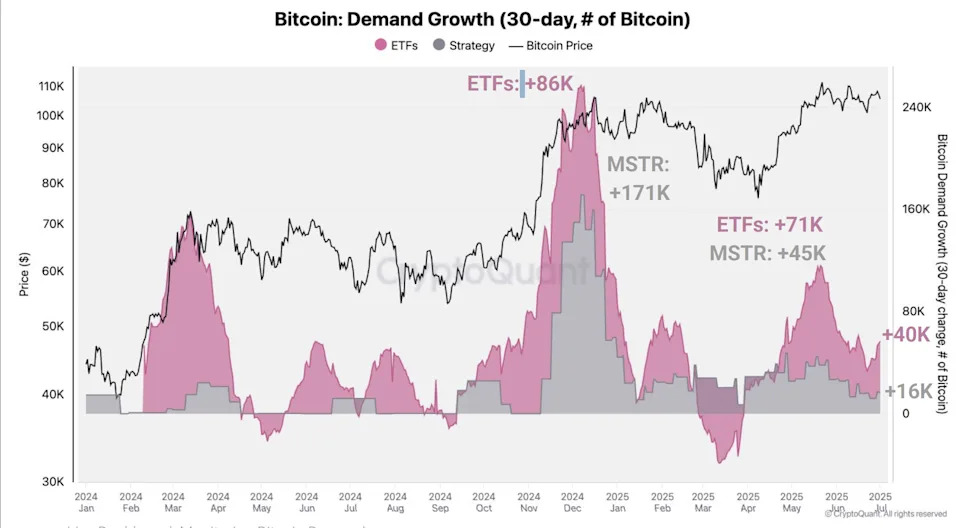
Bitcoin (BTC) is currently trading at $109K, showing modest gains of 0.8% over the past week and 4.5% over the last month, yet it remains in a consolidation phase without breaking past all-time highs. A CryptoQuant report reveals a significant decline in spot demand, with a contraction of -895K BTC in the last 30 days, overshadowing institutional purchases by ETFs and Michael Saylor’s Strategy (MSTR). Institutional buying has notably slowed, with ETF purchases dropping from 86,000 BTC in December to 40,000 recently, and MSTR buys falling from 171,000 to 16,000. This weakening demand is further evidenced by BTC’s nearly empty mempool, indicating low retail interest. SkyBridge Capital’s Anthony Scaramucci suggests the trend of companies adopting BTC as a treasury asset, a key demand driver, may fade, though he remains bullish on BTC overall. Meanwhile, Standard Chartered holds a positive outlook, targeting a $200K price for BTC. Other market movements include Ethereum rallying to $2,558.63 with strong ETF inflows, gold surging 1.91% to $3,336.61 amid a weakening dollar, and Japan’s Nikkei 225 slipping 0.26% due to tariff uncertainties. The crypto market faces challenges from declining demand, raising questions about potential resistance to BTC’s price if institutional support continues to wane.
Key Points
Summary
As Bitcoin continues to lead the cryptocurrency market with strong institutional adoption, investors are increasingly eyeing altcoins for diversification and high potential returns in 2025. Ethereum (ETH) holds its position as the second-largest crypto by market cap, benefiting from renewed interest, network upgrades, and dominance in DeFi, NFTs, and dApps. Solana (SOL), despite a recent drop in portfolio holdings, remains a compelling long-term investment due to its low-cost, high-volume transaction capabilities. XRP (Ripple) has seen a surge in investor interest, with portfolio holdings doubling, fueled by speculation of an ETF approval and its utility in cross-border payments. Chainlink (LINK) stands out as the leading decentralized oracle network, critical for DeFi and Web3 applications. Lastly, Tron (TRX) is gaining traction as a cost-effective blockchain for stablecoin transactions and smart contracts, with a potential ETF filing adding to its appeal. These five altcoins present diverse opportunities for investors looking beyond Bitcoin to enhance their crypto portfolios for the remainder of 2025.

Key Points
Summary
Tidal's YieldMax Bitcoin Option Income Strategy ETF (YBIT) aims to capitalize on Bitcoin's volatility by generating income through writing covered calls on synthetic long positions in the iShares Bitcoin Trust (IBIT). Boasting a striking 41.5% annual distribution rate, YBIT appears as an income powerhouse. However, its strategy is intricate, involving options on options, which can lead to unstable returns in turbulent markets. Over 90% of its 2024 distributions were from return of capital, essentially returning investors' own money rather than genuine income. Performance-wise, YBIT underperformed significantly, with a 38% share decline over the past year against Bitcoin's 76% rise, achieving only a 15% total return with reinvested distributions. Additionally, its high 0.99% expense ratio cuts into returns. While YBIT offers a simplified, tax-efficient way to gain Bitcoin exposure with downside protection via distributions, its complexity, high fees, and underwhelming results make it a less attractive option. Investors seeking Bitcoin exposure or income might find better alternatives in direct cryptocurrency investments or traditional dividend ETFs.

Key Points
Summary
Elon Musk, a prominent figure in the crypto community, recently stirred excitement on social media platform X by liking a comment suggesting he might be quietly accumulating Bitcoin (BTC). This interaction, confirmed to be from Musk himself, reignited discussions about his involvement with the cryptocurrency. Musk's history with Bitcoin is well-documented, as Tesla, his electric vehicle company, holds over $1 billion in BTC and briefly accepted it as payment in 2021 before halting due to environmental concerns over mining. Bitcoin, launched in 2009, remains the world's largest cryptocurrency with a market cap of $2.1 trillion, dominating over 60% of the $3.3 trillion crypto market. As of July 4, 2025, Bitcoin's value has surged nearly 85% since the previous year, trading at $107,750.71. While Musk's actions continue to influence crypto conversations, the article emphasizes the importance of independent research before making investment decisions, highlighting the speculative nature of such social media interactions.

Key Points
Summary
Robinhood has made a groundbreaking move by launching zero-commission, tokenized U.S. stocks and private-company tokens on Arbitrum, an Ethereum layer-2 blockchain, as reported by TheStreet on July 4, 2025. This initiative aims to enable 24/7/365 trading with near-instant settlement, a significant departure from traditional market hours. Bitwise CIO Matt Hougan, a veteran analyst who correctly predicted a crypto rally in 2024, expressed strong optimism about Robinhood’s direction, stating it shows where the market is headed. He believes this move will boost interest in Ethereum and Arbitrum, attracting both retail and institutional users to on-chain assets. Hougan also highlighted the rapid shift toward tokenized securities, predicting that in a few years, the industry will marvel at how quickly traditional models were replaced. Although currently unavailable to U.S. investors, this development signals a future of continuous, blockchain-based markets that could unlock new liquidity and reduce risks for long-term investors. With Robinhood at the forefront, tokenized stocks may redefine trading dynamics, placing blockchain technology at the core of financial innovation.
Key Points
Summary
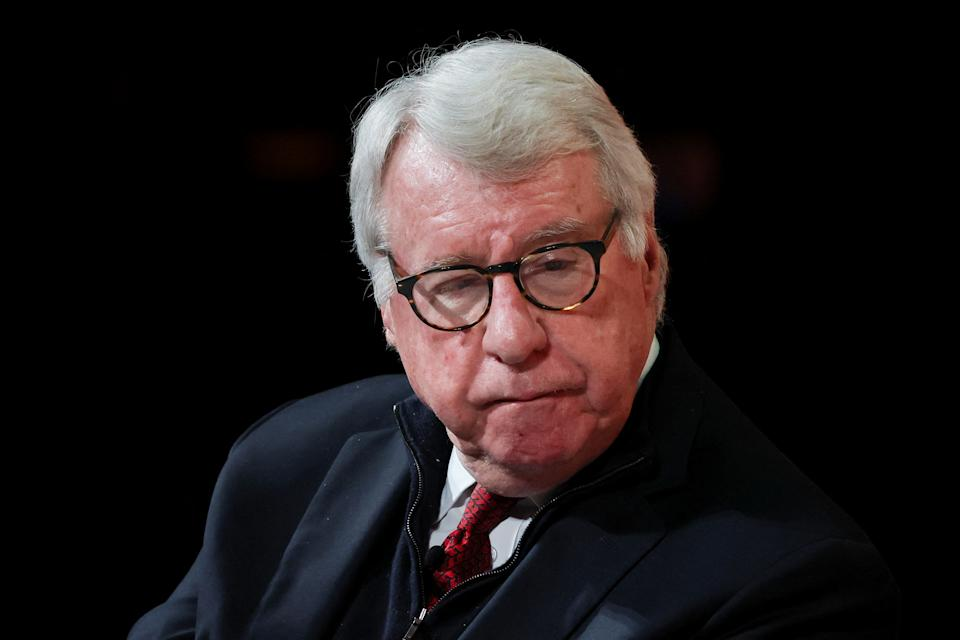
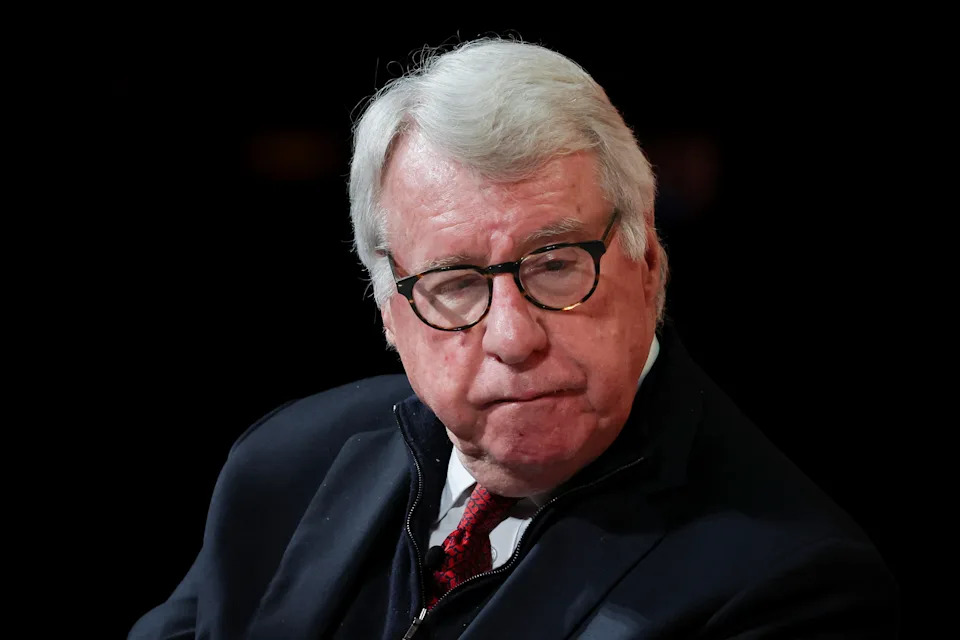
Jim Chanos, a renowned Wall Street short seller, has escalated his criticism of Michael Saylor’s bitcoin-centric strategy at MicroStrategy (MSTR), calling it overvalued and advising investors to buy bitcoin directly. MicroStrategy, originally a software firm, now holds 597,325 bitcoins worth $64 billion, becoming the largest corporate holder, with its stock surging 210% in the past year, far outpacing bitcoin’s 80% gain. Saylor defends his approach, emphasizing the accessibility of MSTR shares over direct bitcoin ownership due to regulatory ease and promoting leveraged investments for higher returns. The public clash between Chanos and Saylor has gripped Wall Street, with Chanos dismissing Saylor’s model as “financial gibberish,” while Saylor predicts Chanos’s downfall if MSTR stock rises. Despite short sellers losing $3.6 billion betting against MSTR in 2025, the company faces lawsuits over misleading investors about bitcoin volatility risks and analyst warnings about the sustainability of its debt-driven strategy. Meanwhile, other firms are adopting similar bitcoin treasury strategies, intensifying competition for capital, though short sellers have profited more from betting against MSTR imitators.

Key Points
Summary
This article from Zacks Investment Research highlights Affirm Holdings, Inc. (AFRM), a San Francisco-based fintech company founded in 2012, specializing in transparent installment loans for consumers at the point of sale. Targeting momentum investors who capitalize on stock price trends, the piece emphasizes AFRM's strong performance with a Momentum Style Score of B and a VGM Score of B. The stock has risen 3.4% in the past week, 24.2% over four weeks, and an impressive 138.8% over the last year. Additionally, for fiscal 2025, earnings estimates have improved, with the Zacks Consensus Estimate increasing by $0.12 to $0.03 per share, supported by upward revisions from four analysts in the last 60 days. AFRM also shows a remarkable average earnings surprise of 102.2%. Despite a Zacks Rank of #3 (Hold), the article suggests that AFRM's solid metrics and style scores make it a noteworthy consideration for investors seeking high-momentum stocks.

Key Points
Summary
Flashes, a new app launched this year by Berlin-based developer Sebastian Vogelsang, offers an Instagram-like alternative built on the Bluesky social network’s AT Protocol. Available on the App Store for iOS 17+, Flashes reimagines Bluesky’s content by focusing on visual posts, presenting them in a scrollable feed rather than a timeline. Users can post images and videos (up to 3 minutes), apply filters, and curate their profiles with a “Portfolio” feature, while seamlessly interacting with Bluesky’s 37 million-strong community through likes, reposts, and replies. The app also provides access to over 50,000 custom Bluesky feeds on topics like art or gardening. Requiring a Bluesky account to start, Flashes aims to attract users seeking open alternatives to Instagram, competing with apps like Pinksky and Mastodon’s Pixelfed. Future plans include push notifications, subscriptions for premium features, and expansion to Android and web platforms, alongside new features like Stories and albums. Vogelsang envisions Flashes evolving into its own AT Protocol-based platform while maintaining Bluesky compatibility, potentially broadening its appeal to photographers and visual content creators looking for a fresh social media experience.

Key Points
Summary
Yesterday's market saw varied performances among key companies. Tesla (NASDAQ:TSLA) rose 4.4% after releasing its Q2 production and delivery figures, which, despite a year-over-year decline, were better than some investors anticipated. Reddit (NYSE:RDDT) also saw a positive movement, increasing by 5.2% following updates to its credit and guarantee agreement. Coinbase (NASDAQ:COIN) enjoyed a 5.9% uptick after acquiring LiquiFi, a token management platform, signaling growth in blockchain infrastructure. On the downside, Oscar Health (NYSE:OSCR) plummeted 15.1% due to a Bearish rating from Barclays and negative spillover from a peer company. Intel (NASDAQ:INTC) also declined by 5.1% amid speculation of a major pivot away from its 18A chip-making process. These movements reflect a mix of sector-specific challenges and strategic developments, with detailed analysis reports available for each company to assess investment potential.

Key Points
Summary
This article examines Coinbase (NASDAQ: COIN), a leading cryptocurrency exchange, and the Tidal Trust II - YieldMax Short Coin Option Income Strategy ETF (FIAT), which simulates a short position on Coinbase. Coinbase, after a volatile journey since its 2021 listing, hit a low of $32.53 in 2022 due to market headwinds but rebounded strongly in 2024 with a 148% surge in trading volume and 111% revenue growth, trading near its all-time high of $356. However, its high valuation raises concerns about sustainability amid potential market cooling or competition. FIAT, designed for income with a 55.6% distribution rate, largely returns investors’ capital (93% ROC) and charges a 0.99% expense ratio, yielding only a single-digit return. Its synthetic short strategy via options on Coinbase has failed, with an 84% stock price drop over the past year. The article advises against FIAT, suggesting direct shorting of Coinbase for bearish investors or stable dividend ETFs for income seekers, highlighting FIAT’s complexity and underperformance as key drawbacks.


