


Key Points
Summary
This Yahoo Finance article discusses a pivotal shift in the stock market, moving away from Big Tech's dominance toward a broader sector rally. After a week of market declines, including significant drops in tech stocks like Oracle (-4.47%) and Broadcom (-11.43%), analysts note a rotation fueled by strong corporate results across various industries and bolstered by a recent Federal Reserve rate cut favoring cyclical stocks. The article highlights growing AI investment concerns, with high spending and uncertain returns causing frequent bouts of uncertainty, as seen in recent tech stock dives. However, this tech weakness is viewed as an opportunity for other sectors to rise, with potential for value stocks and small caps, such as the Russell 2000 which hit a record high, to outperform. Experts like Eric Teal from Comerica Wealth Management and Thomas Shipp from LPL Financial suggest that this market pause and increased volatility could be necessary for sustained growth, offering investors a chance to reposition as relative valuations remain attractive. The overall sentiment is cautiously optimistic, with the market catching its breath and room for the rally to persist.

Key Points
Summary
President Trump has unveiled a $12 billion aid package for US farmers struggling under the weight of his tariff policies, which have disrupted agricultural exports, notably soybeans to China, and increased costs. Farmers, however, deem the aid inadequate to offset losses from low prices and lost markets. Meanwhile, Trump's tariffs, enacted under the International Emergency Economic Powers Act, have reportedly cost US households an average of $1,200, with Democrats warning of potential increases to $2,100 next year. The US Supreme Court will soon decide the tariffs' legality, a ruling that could mandate billions in refunds if unfavorable to Trump. Amidst this, Trump has approved Nvidia's sale of advanced chips to China, hinted at further tariff reductions on food items, and floated a $2,000 "tariff dividend" for Americans. Additionally, trade tensions persist with Indonesia over a delayed agreement, while companies like Costco seek tariff refunds anticipating a court ruling against the duties. The broader economic impact includes China's $1 trillion trade surplus, driven by exports to Southeast Asia and sectors like autos, despite domestic economic challenges. Trump's policies continue to spark debate over their cost to consumers and effectiveness in achieving economic goals.

Key Points
Summary
Housing affordability is set to see slight improvements in 2026, as mortgage rates are expected to dip to around 6% and home price appreciation slows to 1-3%, outpaced by wage growth of 3-4%. This could encourage more buyers and sellers to enter the market, particularly during the spring homebuying season, marking the first significant sales increase since the 2023 plunge to mid-1990s levels. However, experts caution that this is just the beginning of a long normalization process, with many still unable to afford homes due to recent price and rate surges. Increased inventory, driven by returning sellers, may offer more options, while regional disparities persist—Northeastern and Midwestern markets are likely to see price growth, while areas like Florida and Texas may cool. Economists and real estate professionals remain cautiously optimistic, noting that even small rate drops can meaningfully lower monthly payments, potentially revitalizing buyer activity if trends hold.
Key Points
Summary
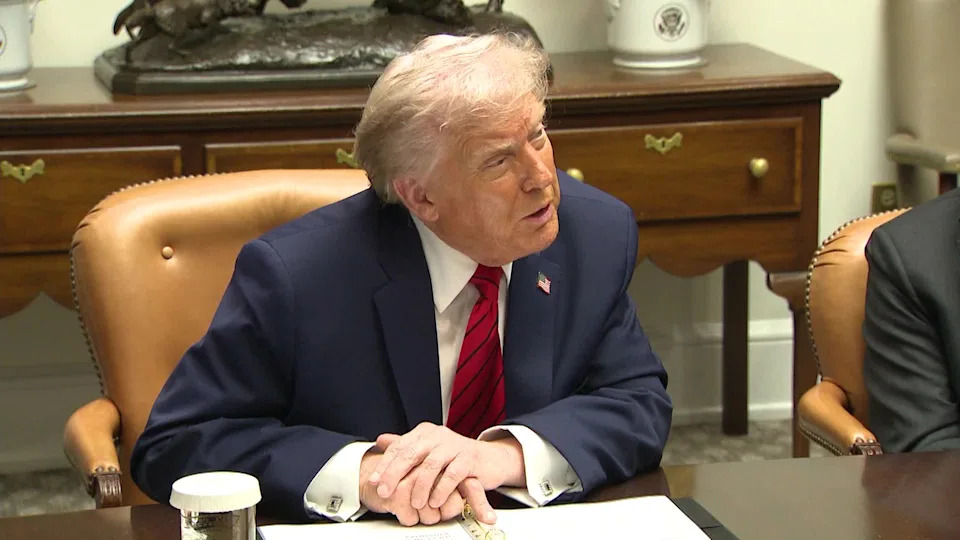
Donald Trump's unexpected involvement in the proposed sale of Warner Bros. Discovery Inc. has introduced significant uncertainty into an already complex battle between Netflix Inc. and Paramount Skydance Corp. over key Hollywood assets. Trump's insistence on new ownership for CNN, a frequent target of his criticism, alongside his connections to Paramount through his son-in-law Jared Kushner and donor Larry Ellison, raises concerns about personal and political motivations. Legal experts warn that his premature comments, made before any formal antitrust review, are unprecedented and risk undermining the Justice Department's process, potentially inviting legal challenges. Critics argue Trump’s actions blur the lines between regulatory scrutiny and personal interests, prioritizing political influence over market fairness. This intervention exemplifies Trump's broader strategy to expand executive power over US industry, prompting corporate leaders to seek his favor for deal approvals. The situation also draws international attention, with possible implications for EU antitrust enforcement due to Paramount’s foreign funding. Ultimately, Trump’s role in the sale could reshape media landscapes while challenging the integrity of independent federal oversight.

Key Points
Summary
The article from Yahoo Finance’s Morning Brief explores the puzzling trend of rising bond yields despite the Federal Reserve’s rate cuts, which began in September with a 1.5 percentage point reduction and are expected to continue with a quarter-point cut and further reductions in 2026. Typically, Treasury yields, which impact mortgage rates and borrowing costs, would decrease with Fed easing, but the 30-year and 10-year yields have climbed to 4.8% and 4.17%, respectively. Analysts attribute this to factors like trade policy shifts, growing national debt concerns, and investor skepticism about the Fed’s strategy amid lingering inflation. While some interpret higher yields as a positive sign of recession avoidance, others see them as a warning of policy risks. The Trump administration seeks to lower these rates to boost economic activity, but the disconnect between Fed actions and market behavior underscores the complexity of the current economic landscape.
Key Points
Summary
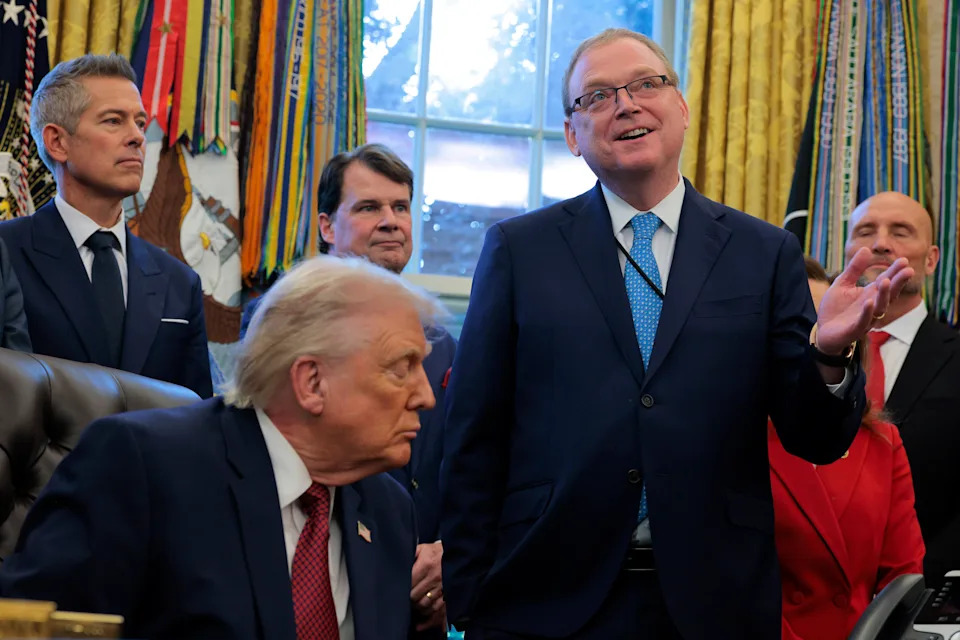
President Trump has begun the process of selecting the next Federal Reserve chair, starting with an interview with former Fed governor Kevin Warsh. The shortlist of five candidates includes National Economic Council Director Kevin Hassett, seen as the frontrunner, Fed governors Chris Waller and Michelle Bowman, and BlackRock's Rick Rieder. Trump, who has been critical of current Fed Chair Jerome Powell for not lowering interest rates aggressively enough, aims to replace Powell, whose term ends in May. Trump has indicated a preference for a candidate willing to cut rates immediately and expects to announce his decision early next year. While speaking on Air Force One, he hinted at having a clear idea of his choice. The interview process, led by Treasury Secretary Scott Bessent, may face delays or cancellations, as reported by The Wall Street Journal. Warsh, a vocal critic of the Fed, has recently argued that the central bank should reconsider its stagflation forecasts and recognize AI's potential to boost productivity and reduce inflation. This selection process underscores Trump's desire for greater influence over monetary policy, raising questions about the Fed's independence and future interest rate decisions.
Key Points
Summary
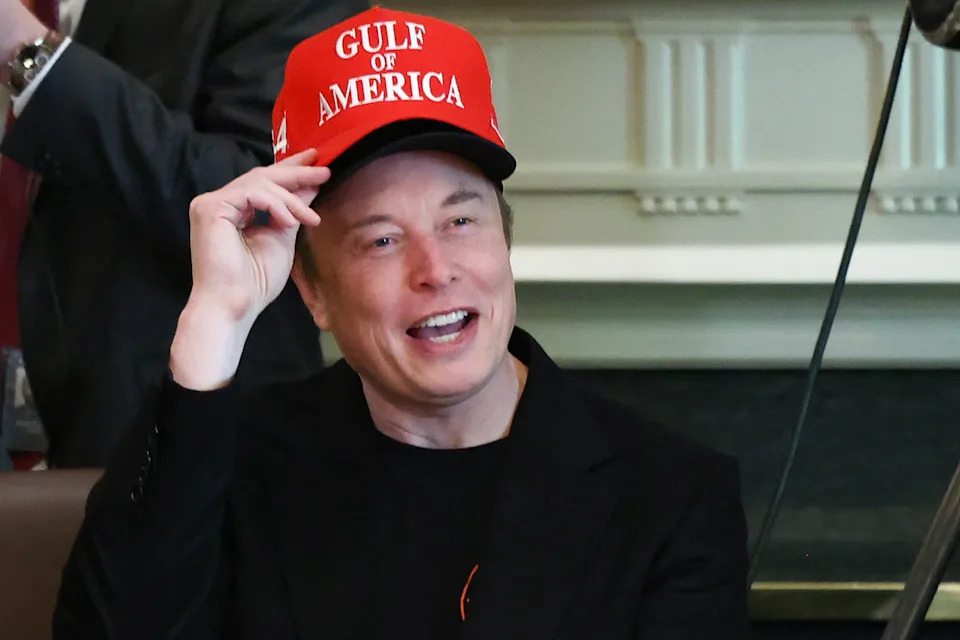
Tesla Chair Robyn Denholm has issued a urgent plea to shareholders to approve CEO Elon Musk’s unprecedented compensation package, potentially worth $1 trillion, warning that his departure could jeopardize Tesla’s future. In a letter to shareholders, Denholm emphasized Musk’s indispensable role in driving Tesla’s success across automotive, robotics, and autonomous driving sectors, arguing that without an equitable pay-for-performance plan, Tesla risks losing his leadership and significant value. The package, linked to ambitious targets like a $8.5 trillion market cap, faces opposition from proxy advisers Glass Lewis and ISS, who deem it excessive. Musk, embroiled in a legal battle over his 2018 pay package, has criticized these advisers harshly. Despite concerns over Musk’s political engagements harming Tesla’s brand, analysts like Dan Ives predict shareholder approval at the November 5 meeting, viewing it as crucial during a critical phase for Tesla. Denholm insists Musk alone can lead Tesla to new heights in growth and societal impact.

Key Points
Summary
An Ontario government ad featuring the late Ronald Reagan criticizing tariffs has sparked a diplomatic clash, with President Donald Trump threatening a 10% tariff hike on Canada and halting trade negotiations. The ad, aired during the World Series and funded by Ontario, was paused by Premier Doug Ford after achieving its goal of engaging U.S. audiences, though Trump remains unappeased, calling it "dishonest." Meanwhile, Trump is entangled in broader trade disputes, including a looming meeting with China's Xi Jinping amid escalating tensions over software exports and rare earth minerals. Trade negotiations with India and tariff impacts on smaller nations like Lesotho highlight the global ripple effects of Trump's policies. His tariffs, often tied to national security and economic concerns, are also under legal scrutiny, with a Supreme Court challenge pending. As companies pass costs to consumers, the economic fallout continues to unfold across multiple fronts.

Key Points
Summary
General Motors (GM) showcased significant technological advancements following a strong earnings report, focusing on autonomous driving, AI integration, and robotics at a New York City event. GM announced an "eyes-off" enhancement to its Super Cruise hands-free driving system, set to debut in the 2028 Cadillac Escalade IQ EV, with plans to expand from highways to urban settings. The company also revealed a partnership with Google to integrate conversational AI powered by Gemini into vehicles starting in 2026, enabling natural driver interactions for navigation and personal assistance. Additionally, GM is developing a custom AI tailored to vehicle capabilities and driver needs. Beyond software, GM introduced "cobots" to assist in factory assembly and highlighted future EVs with bidirectional charging to serve as backup power sources for homes and businesses. While leveraging past learnings from its discontinued Cruise robotaxi service, GM is now prioritizing personal autonomy over commercial applications. CEO Mary Barra emphasized a rapid rollout of these innovations, signaling GM’s commitment to transforming mobility and enhancing customer experiences through cutting-edge technology.

Key Points
Summary
ExxonMobil Corp. has initiated legal action against California, challenging two new state laws that mandate large corporations to report on greenhouse gas emissions and climate-related financial risks. Filed on Friday, the lawsuit claims these laws infringe on the First Amendment by compelling ExxonMobil to publicly support climate change opinions it does not endorse. One law requires companies with over $1 billion in revenue to disclose emissions annually, while the other mandates biennial reports on climate risk for firms with over $500 million in revenue. ExxonMobil argues that these regulations, aligned with California’s Greenhouse Gas Protocol and Task Force on Climate-related Financial Disclosures, force it to accept responsibility for global warming, constituting government-compelled speech. The company also asserts that the laws conflict with federal securities regulations, overstep state jurisdiction by addressing global operations, and target large corporations to shame them into compliance. ExxonMobil acknowledges climate change risks but opposes California’s approach, alleging it singles out major companies for their perceived responsibility. The energy giant seeks a court ruling to block the laws and declare them unconstitutional and preempted by federal law.

Key Points
Summary
The U.S. government shutdown, now the second-longest in history, shows no signs of resolution as it enters its fourth week, leaving federal workers without pay and critical services disrupted. The White House announced that October inflation data might be canceled due to the inability to collect data, warning of severe economic fallout, while September's inflation numbers were released late but lower than expected. Air traffic controllers, missing paychecks, are causing flight delays amid safety concerns, with Transportation Secretary Sean Duffy unable to guarantee uninterrupted travel. November 1 looms as a critical date, with military personnel facing unprecedented pay delays, SNAP benefits at risk for over 41 million Americans, and healthcare enrollment complications tied to the Affordable Care Act. The political standoff, driven by disputes over healthcare subsidies, continues as Democrats and Republicans trade blame. Meanwhile, food banks brace for increased demand, and hunger rises due to prior cuts and stricter SNAP requirements. The shutdown's ripple effects threaten economic stability, public safety, and essential support systems across the nation.

Key Points
Summary
Beth Pinsker, a certified financial planner and author of My Mother's Money: A Guide to Financial Caregiving, shares her challenging journey as her mother’s financial caregiver in a MarketWatch article. Over a year and a half, she navigated emotional and logistical hurdles, from managing bills to handling her mother’s death at 76. Pinsker faced immediate obstacles, like banking issues with power of attorney documents and the complexities of joint accounts, which risk fraud and sibling disputes. She emphasizes the importance of legal documents like healthcare proxies and durable power of attorney for medical and financial decisions. The high cost of long-term care, up to $20,000 monthly, and Medicare’s limited coverage, including a surprising hospice rejection for her mother, were significant hurdles. Pinsker’s story underscores the need for preparation, urging families to address these difficult topics early to avoid future struggles. Her personal account aims to guide others through the often unspoken challenges of financial caregiving, hoping to spare her own children similar hardships.
Key Points
Summary
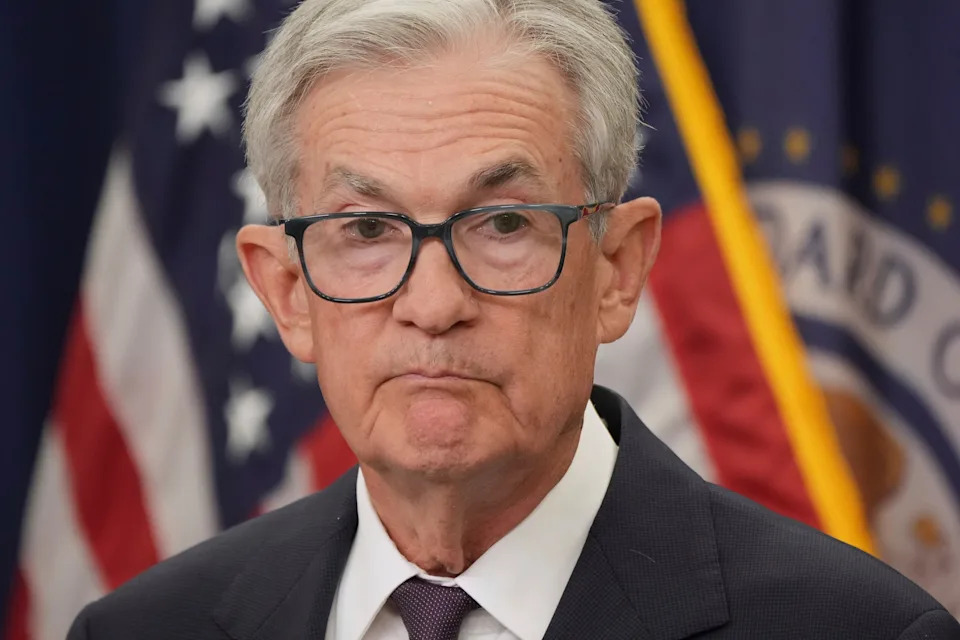
September's inflation report brought a positive surprise with lower-than-expected figures, offering temporary relief to the Federal Reserve and investors as shelter costs softened and core services moderated. However, this may be the last reliable economic data for months due to the ongoing government shutdown, which has frozen key data releases. Economists, including RSM's Joe Brusuelas, warn that the Fed will be navigating with limited visibility, relying on estimates until early next spring. Adding to the complexity, early tariff effects are appearing in goods prices like apparel and furnishings, with predictions of broader consumer impact by 2026. Bank of America anticipates a 25-basis-point rate cut next week but cautions against strong guidance amid data uncertainty. Meanwhile, an uneven consumer landscape—where lower-income households struggle while wealthier ones bolster spending—further challenges the Fed's policy decisions. As tariff pressures build and data fog thickens, the Fed faces a bumpy path ahead.

Key Points
Summary
President Donald Trump’s upcoming Asia trip focuses on securing economic agreements and critical minerals deals to bolster US supply chains and counter China’s dominance in rare earths. Visiting Malaysia for the ASEAN summit, Japan, and South Korea for the APEC summit, Trump will engage in bilateral talks and a pivotal meeting with Chinese President Xi Jinping. The discussions aim to resolve trade disputes over tariffs and export controls, with Trump threatening a 100% tariff on Chinese goods if restrictions persist. A recent $8.5 billion minerals pact with Australia underscores his strategy to diversify sources. Malaysia is also in talks for a potential minerals deal. Beyond trade, Trump seeks Chinese cooperation on soybean purchases, fentanyl trafficking, and pressuring Russia over Ukraine. Meetings with Japanese and South Korean leaders will further trade and investment goals, with Seoul targeting a tariff-lowering pact. This trip, amid escalating US-China trade tensions and an investigation into China’s compliance with past agreements, highlights Trump’s efforts to strengthen economic ties in Asia while addressing global security and trade challenges.

Key Points
Summary
A group of nearly 50 prominent economists, including former Federal Reserve Chairs Ben Bernanke and Janet Yellen, has filed a brief urging the US Supreme Court to overturn President Donald Trump’s sweeping global tariffs. They argue that the tariffs, justified by the Trump administration as a response to trade deficits deemed a national emergency under the 1977 International Emergency Economic Powers Act, are based on flawed economic reasoning. The economists assert that trade deficits are a normal aspect of global trade and that the tariffs will not resolve them but will instead impose trillions of dollars in economic costs, impacting every American household. The Supreme Court is set to hear arguments on November 5 to determine the legality of these tariffs, with additional briefs from former judges, national security experts, and businesses challenging Trump’s policies. Meanwhile, the administration defends the tariffs as essential to national economic security, while critics, including small businesses and Democratic-led states, call them an illegal tax burden. The debate underscores broader tensions over presidential authority in trade policy and the economic consequences of protectionist measures.

Key Points
Summary
Inflation in September held at 3% year-over-year, a slight rise from August's 2.9% but below the forecasted 3.1%, according to the Bureau of Labor Statistics. This rate remains above the Federal Reserve's 2% target, with core inflation easing to 3% from 3.1%. Monthly price increases slowed to 0.3%, driven partly by a 4.1% rise in gasoline prices, though yearly energy costs dipped. Food and housing inflation showed moderation, while apparel and household items rose, hinting at tariff impacts. The report, delayed by the ongoing government shutdown—the second-longest in U.S. history—may be the last reliable data for months, as warned by RSM economist Joe Brusuelas, who noted potential data quality issues ahead. Despite stubborn inflation, markets expect a Fed rate cut next week. Analysts like BlackRock's Gargi Chaudhuri see a slow disinflation trend, with progress in shelter and services, though goods prices are firming due to tariffs. Brusuelas cautioned that reaching the 2% target could take years, signaling ongoing challenges for the Fed.


