


Key Points
Summary
SoftBank Group, under CEO Masayoshi Son, is aggressively pursuing a $22.5 billion investment in OpenAI by year-end, positioning itself as a key player in the AI race. To fund this ambitious bet, SoftBank has sold significant stakes in Nvidia ($5.8 billion) and T-Mobile US ($4.8 billion), and may leverage undrawn margin loans against its Arm Holdings ownership, alongside other capital sources like cash reserves and potential IPOs such as PayPay. This investment, initially made at a $300 billion valuation for OpenAI, could yield substantial gains as the startup's valuation approaches $900 billion. The funds are vital for OpenAI's escalating costs in AI model training and projects like the $500 billion Stargate initiative for AI data centers, crucial for maintaining a competitive edge against rivals like Google. Meanwhile, SoftBank's focus on OpenAI has slowed other Vision Fund deals, with Son personally approving transactions over $50 million. The rush to finance massive AI infrastructure, mirrored by tech giants like Meta, raises concerns about an "AI bubble" if returns fall short of expectations. Despite the risks, SoftBank's strategic moves, including potential divestitures in Didi Global, underscore its commitment to shaping the future of AI technology.
Key Points
Summary
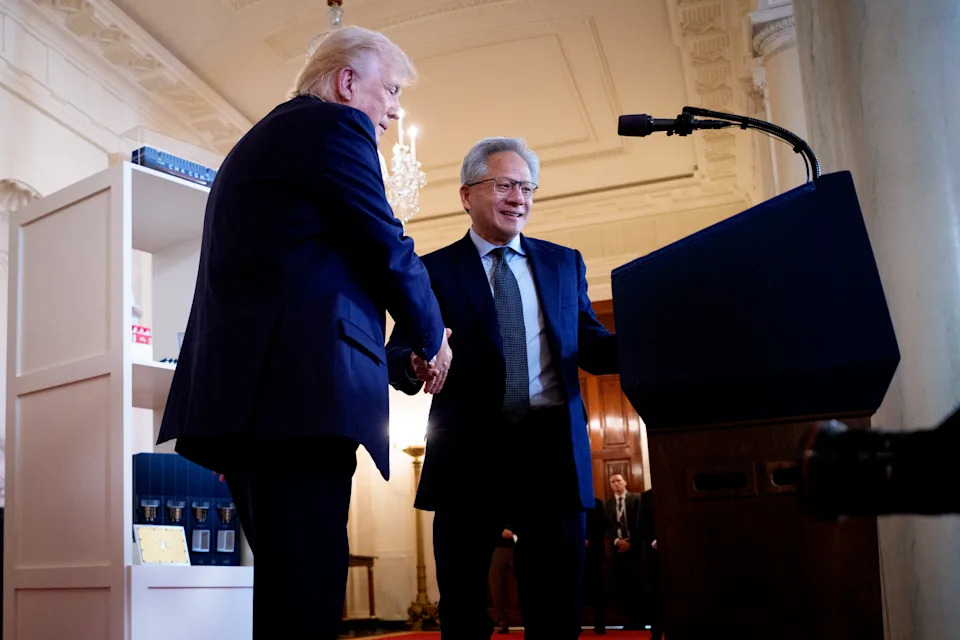
Nvidia (NVDA) stock surged 3.93% on Friday following a Reuters report that the Trump administration has started reviewing the export of Nvidia’s H200 chips to China, signaling potential adherence to President Trump’s promise to allow such sales with a 25% government fee. The US Commerce Department has forwarded license applications to other departments for evaluation over the next 30 days. Additionally, Nvidia’s $5 billion investment in Intel (INTC) was cleared by US antitrust agencies, boosting Intel’s shares by 1.49%. This positive momentum extended to other chipmakers, with Micron (MU) up 6.99%, Advanced Micro Devices (AMD) up 6.15%, and Broadcom (AVGO) up 3.18%. However, challenges remain as national security experts warn that providing China access to advanced US chip technology could undermine America’s AI leadership. Furthermore, China’s past reluctance to accept Nvidia chips due to its own security concerns adds uncertainty. Despite these hurdles, the news revived the broader tech sector, pushing Nvidia and related stocks to session highs and setting Nvidia on track for a weekly gain as the world’s largest company by market cap.
Key Points
Summary
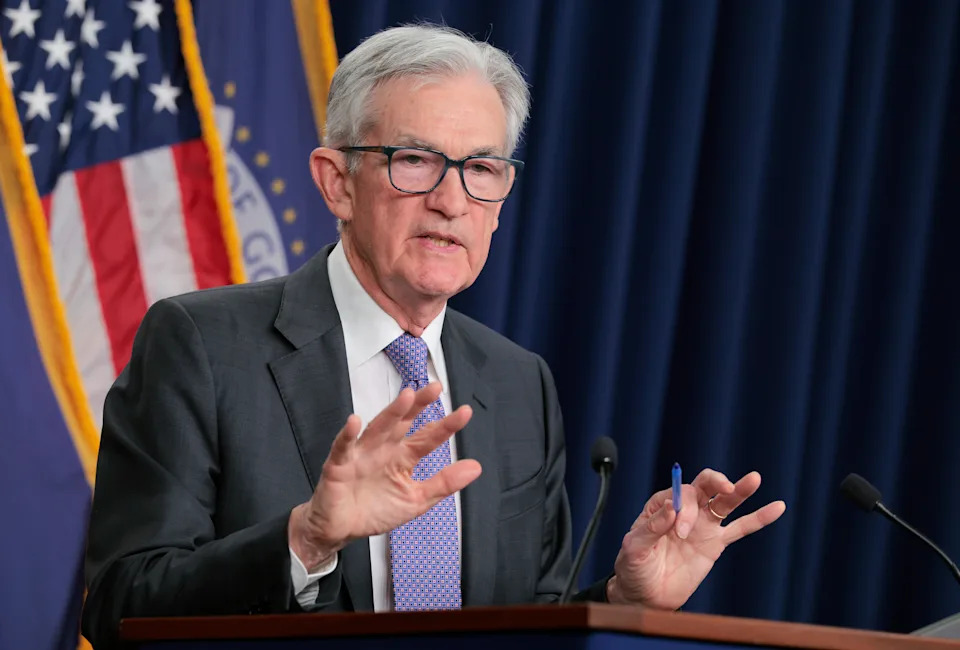
Inflation pressures in November were milder than anticipated, with the Consumer Price Index (CPI) rising 2.7% year-over-year, below the 3.1% forecast by economists, as reported by the Bureau of Labor Statistics. Core CPI, excluding volatile food and energy prices, increased by 2.6%, also under expectations. This marks the first inflation data release since November, as October's report was canceled due to a 43-day government shutdown, leaving no month-to-month comparisons. Analysts suggest this data aligns with a slowdown in core PCE inflation to 2.7%, closer to the Federal Reserve’s 2% target. However, skepticism remains due to data gaps, and tariff impacts on prices appear muted despite holiday import stockpiling. The Fed, focused on supporting a softening labor market, may remain cautious, with traders estimating a 25% chance of a rate cut in January. Recent Fed projections indicate only one rate cut in 2026 after reductions in 2025. Meanwhile, the November jobs report showed higher-than-expected job creation but a four-year high unemployment rate. This mixed economic picture, alongside inflation trends, will likely keep the Fed on the sidelines for now, as it navigates its dual mandate of price stability and employment.

Key Points
Summary
Micron Technology (MU) has forecasted a second-quarter adjusted profit of $8.42 per share, far exceeding Wall Street’s estimate of $4.78, fueled by rising memory chip prices amid tight supply and surging demand from AI data centers. The company’s stock rose nearly 15% following the announcement. Micron, one of three major suppliers of high-bandwidth memory (HBM) chips critical for AI models, also projected current quarter revenue at $18.70 billion, surpassing expectations of $14.20 billion. CEO Sanjay Mehrotra highlighted that memory markets will likely remain constrained beyond 2026, with the company unable to meet full demand for many customers. AI demand is a key driver, enhancing margins and prompting Micron to prioritize AI-related production, including repositioning facilities and increasing 2026 capital expenditure to $20 billion. The company is also negotiating multiyear contracts with key clients. Despite strong first-quarter results of $13.64 billion in sales and $4.78 per share in adjusted profit, supply shortages are impacting customers across segments, as noted by Chief Business Officer Sumit Sadana. Analysts see Micron as a major beneficiary of the AI boom, strategically positioned to capitalize on the growing need for memory chips in data centers and beyond.

Key Points
Summary
Moderate House Republicans, frustrated by Speaker Mike Johnson’s refusal to allow a vote on extending Obamacare subsidies with cost-saving reforms, have allied with Democrats to force a January vote via a discharge petition, achieving a House majority of 218 votes. Led by figures like Pennsylvania’s Brian Fitzpatrick and New York’s Mike Lawler, the revolt comes too late to prevent premium spikes for over 20 million Americans as the Covid-era subsidies expire on Dec. 31, though a vote is set before open enrollment closes on Jan. 15. Premiums could more than double without the tax credits, per KFF research, creating urgency for policyholders. While the House action is significant, Senate approval remains uncertain after rejecting a three-year extension earlier, though bipartisan senators are exploring compromises like income limits. This rebellion underscores Johnson’s diminishing control over a slim 220-seat Republican majority, with Democrats poised to leverage the issue in upcoming elections. Johnson downplayed the internal rift, insisting he retains House control despite mounting challenges.
Key Points
Summary
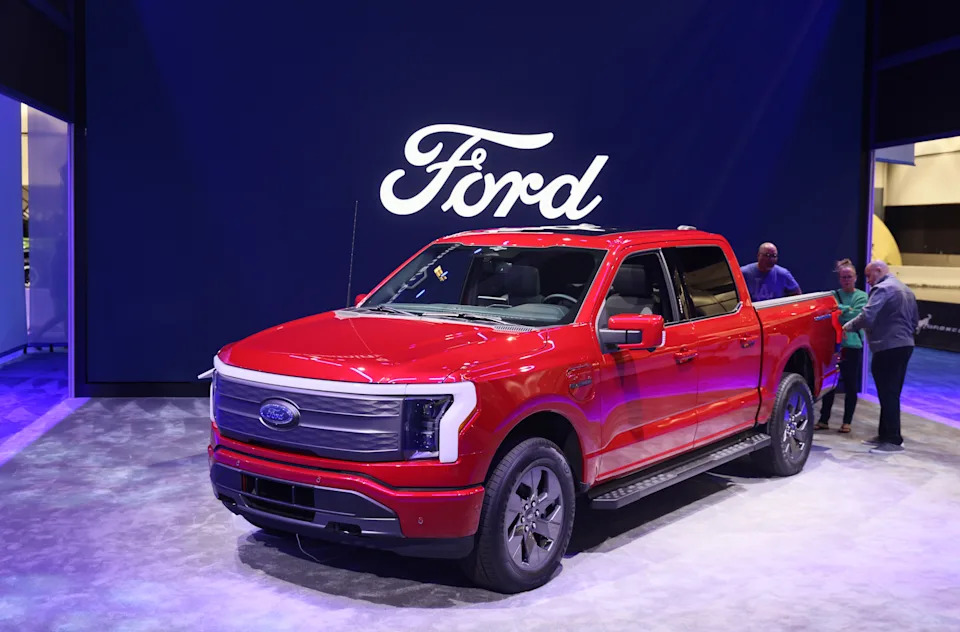
Ford Motor Company has announced a significant strategic shift in its electric vehicle (EV) business, moving towards hybrids and extended-range EVs (EREVs) instead of focusing solely on full EVs. This pivot includes canceling the current F-150 Lightning EV pickup and transitioning to an EREV architecture for its next version by 2027. The company will incur $19.5 billion in charges due to vehicle cancellations, asset impairments, and restructuring, with major financial impacts expected in 2025-2027. Ford is also introducing a cost-effective Universal EV Platform for smaller EVs, starting with a midsize pickup in 2027, and repurposing battery plants for a new energy storage business. Production facilities are being realigned, with plants in Tennessee and Ohio shifting focus to gas, hybrid, and commercial vehicles. By 2030, Ford anticipates that 50% of its global sales will consist of hybrids, EREVs, and EVs, a significant rise from 17% in 2025. Despite the massive charges, Ford raised its 2025 adjusted EBIT guidance to $7 billion, reflecting underlying business strength. CEO Jim Farley emphasized the need to redeploy capital into higher-return areas like Ford Pro, trucks, vans, and hybrids to meet customer demands and improve profitability.

Key Points
Summary
Nasdaq, a leading global exchange hosting tech giants like Nvidia, Apple, and Amazon, is set to file with the U.S. Securities and Exchange Commission to introduce round-the-clock stock trading. This initiative, planned for a rollout in the second half of 2026, aims to expand trading hours from 16 to 23 hours daily, five days a week, with day and night sessions. Driven by surging investor demand for nonstop access to U.S. equities—representing nearly two-thirds of global market value—Nasdaq seeks to cater to international investors trading in their own time zones. The plan includes a one-hour maintenance break and aligns with similar moves by the New York Stock Exchange and Cboe Global Markets. While advocates argue this will enable faster responses to off-hours developments, major Wall Street banks caution against risks like reduced liquidity and increased volatility. Nasdaq's effort reflects a broader trend toward globalization in U.S. markets, supported by infrastructure upgrades and a focus on resilient systems to handle market stress. Additionally, the exchange is exploring tokenized stock trading amid evolving crypto regulations.

Key Points
Summary
Bitcoin (BTC-USD) fell to approximately $86,000 on Monday, marking an 8% decline year to date, as skepticism grows over a potential year-end crypto rally. The cryptocurrency, which hit a record high of $126,000 in October before dropping to nearly $80,000 last month, faces challenges from weak inflows into bitcoin exchange-traded funds and depressed trading volumes, down 20% week over week. Analysts like Linh Tran from XS.com suggest bitcoin will likely remain in a consolidation phase between $80,000 and $100,000, lacking a strong bullish trend. Ether (ETH-USD) also saw losses, slipping below $3,000 and reversing recent gains. Meanwhile, bitcoin is decoupling from the S&P 500, which has risen 16% this year, marking the first significant divergence since 2014. Wall Street is tempering expectations for the crypto sector, with Standard Chartered slashing its bitcoin price targets to $100,000 for 2024 and $150,000 for 2026, down from previous forecasts of $200,000 and $300,000, respectively. Analysts caution against chasing rallies, noting that recent buyers with a cost basis of $103,000 may sell during price upticks rather than buy on dips, further pressuring the market.

Key Points
Summary
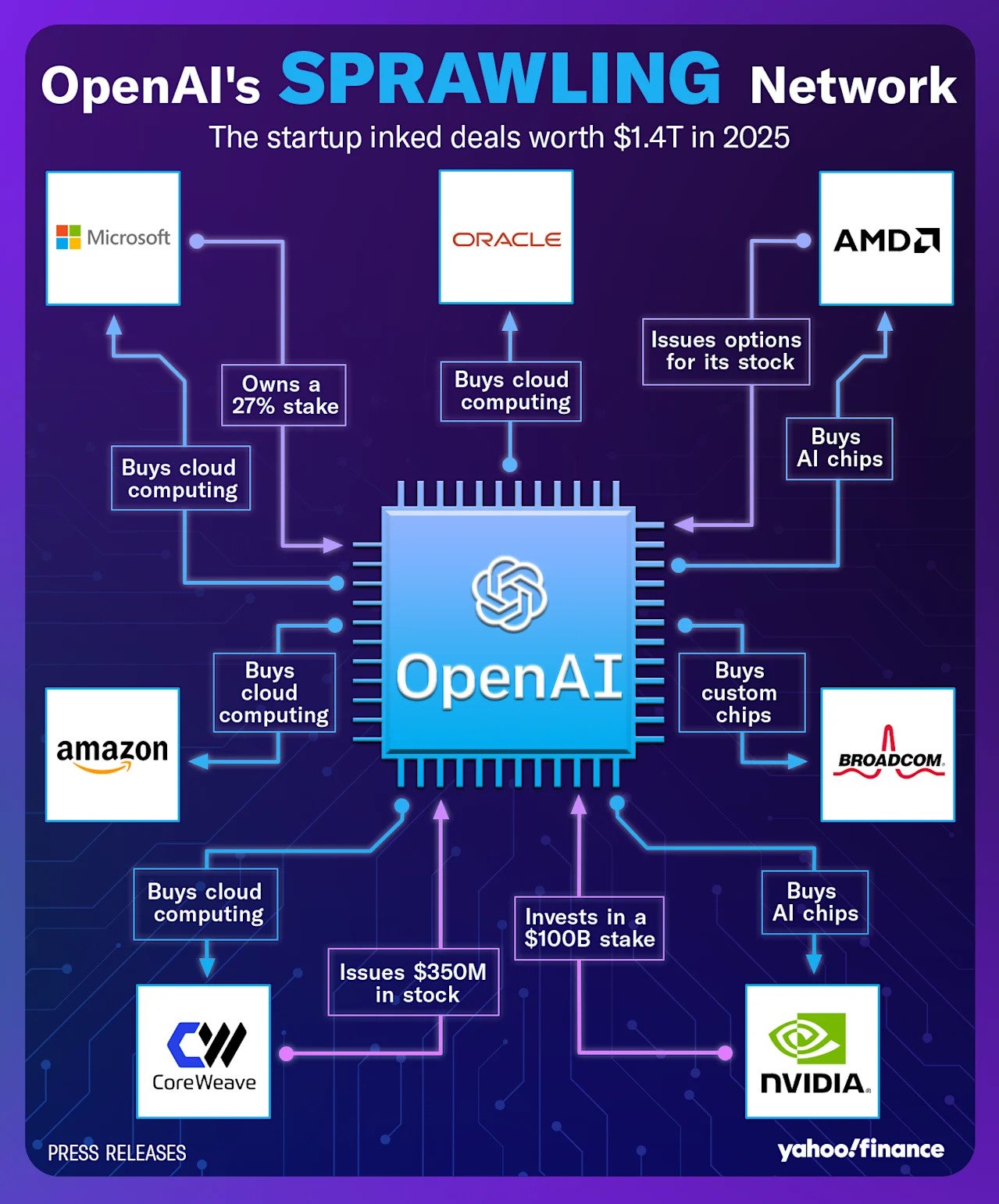
In 2025, OpenAI (OPAI.PVT) solidified its position as a leader in the AI boom, earning Yahoo Finance’s Company of the Year award. The Sam Altman-led firm struck monumental deals with Microsoft, Oracle, AMD, and Nvidia, committing $1.4 trillion over eight years for data centers and hardware. Its private shares surged 153% to a $500 billion valuation, with revenue hitting $13 billion and projections of $200 billion by 2030. Boasting 800 million weekly users, OpenAI's influence boosted partner stocks like AMD (up 24%) and Oracle (up 38%), though recent AI bubble fears caused declines. Despite its growth, a $207 billion funding gap by 2030 and ambitious spending on compute infrastructure raise concerns. Critics urge a focus on core strengths like large language models, while CEO Altman and CFO Sarah Friar defend the aggressive expansion as necessary for scaling toward artificial general intelligence. As competition from Google’s Gemini 3 and Anthropic intensifies, OpenAI’s first-mover advantage wanes, yet analysts remain optimistic about AI’s long-term potential despite valuation bubble concerns.
Key Points
Summary
US stocks fluctuated on Monday as investors moved past a tough week, focusing on upcoming economic data to gauge potential interest rate cuts in 2026. The S&P 500 and Dow Jones Industrial Average dipped below flat, while the Nasdaq Composite fell 0.3% after a significant drop on Friday. A shift from tech to value stocks, driven by concerns over inflated AI expectations, has pressured the Nasdaq and S&P 500, though the Dow has been less affected. Many strategists view this rotation as a healthy broadening of market support. Key economic reports, including jobs and inflation data, delayed by a government shutdown, are anticipated this week, alongside debates over Federal Reserve policy. Wall Street remains optimistic for 2026, buoyed by potential stimulus under President Trump’s influence on the Fed, including speculation over Jerome Powell’s replacement. On the corporate side, iRobot’s stock crashed nearly 70% after bankruptcy filing, hurt by competition and tariffs, while other companies like Zillow and crypto treasuries faced their own challenges. Overall, markets are navigating a mix of economic uncertainty and policy expectations in the final trading week of 2025.

Key Points
Summary
iRobot, the creator of the Roomba vacuum cleaner, filed for Chapter 11 bankruptcy protection in Delaware on Sunday, announcing plans to go private under acquisition by Picea Robotics, its primary manufacturer. Struggling with $190 million in debt from a 2023 loan and an additional $74 million owed to Picea, iRobot has faced severe financial strain due to competition from lower-priced Chinese rivals like Ecovacs Robotics and a 46% U.S. tariff on imports from Vietnam, raising costs by $23 million in 2025. Despite generating $682 million in revenue in 2024 and holding significant market shares in the U.S. (42%) and Japan (65%), the company’s profits have eroded, necessitating price cuts and tech investments. Picea will take full equity, canceling the debts, while other creditors will be paid in full. The bankruptcy is not expected to impact app functionality, customer programs, or supply chains. iRobot’s stock fell 72.14% in early trading, with its valuation dropping from $3.56 billion in 2021 to $140 million. Founded in 1990 by MIT roboticists, iRobot shifted from defense to consumer robotics with the Roomba’s debut in 2002. A failed $1.4 billion buyout by Amazon in 2023, stalled by European competition concerns, further complicated its financial woes.
Key Points
Summary
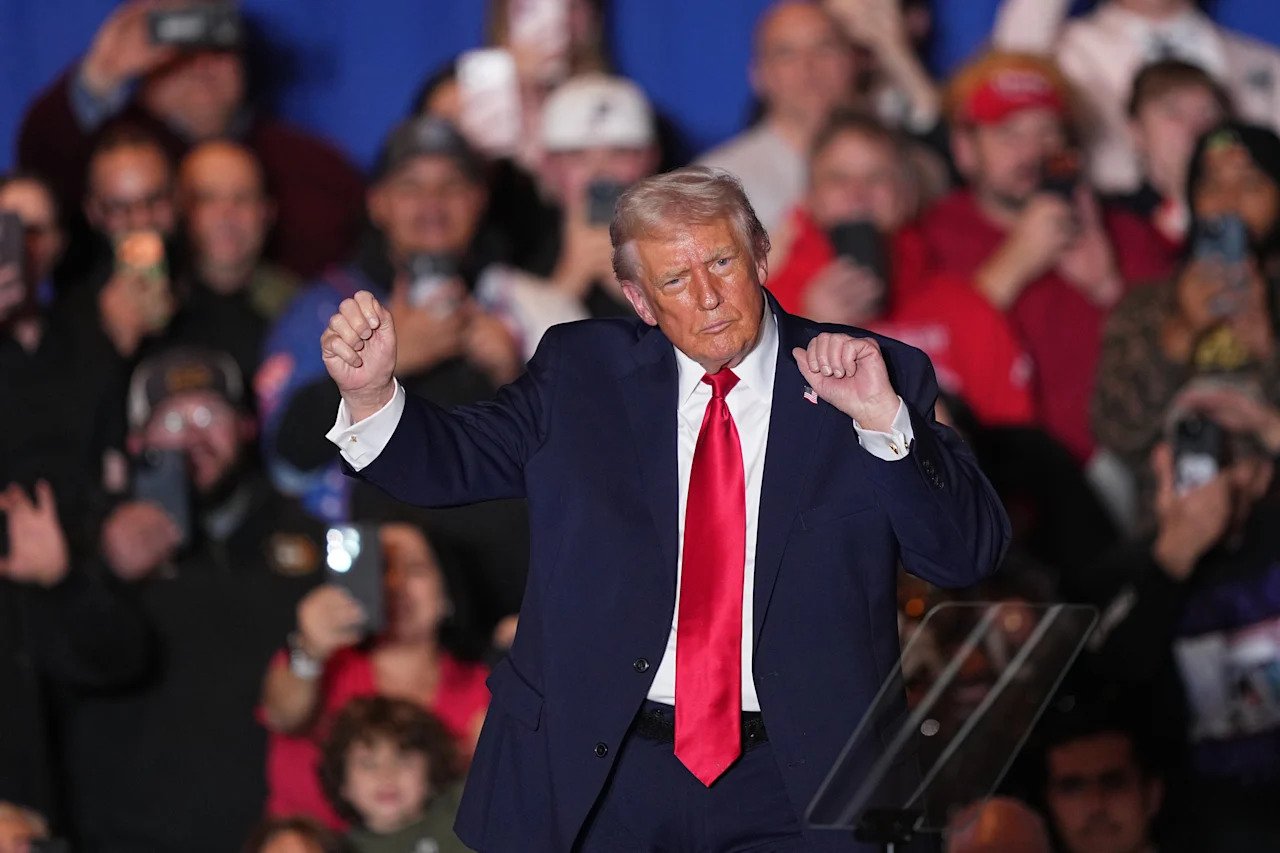
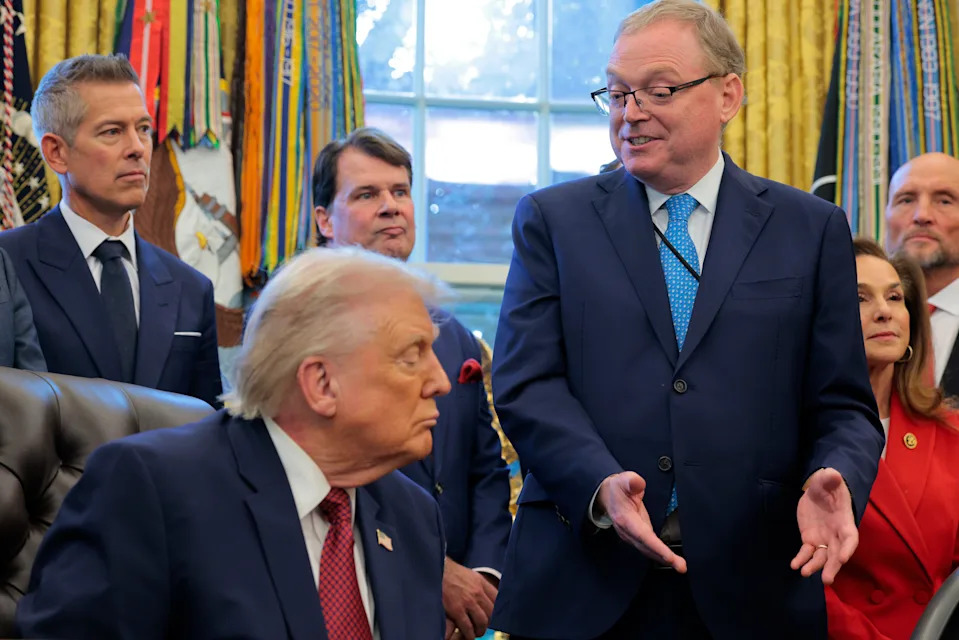
President Trump's tariff policies have sparked significant debate and economic impact, as detailed in this Yahoo Finance analysis. Tariff revenues declined in November to $30.76 billion from $31.35 billion in October, the first drop since implementation. Trump has proposed multiple uses for these funds, including $2,000 dividend checks and funding tax cuts, while expressing a strong affinity for tariffs at rallies. However, tariff relief on items like coffee and oranges reflects public affordability concerns. A potential Supreme Court ruling could invalidate many tariffs, risking $100 billion in refunds. Meanwhile, a $12 billion farmer bailout was introduced to mitigate agricultural losses from the trade war, though farmers deem it insufficient. Democrats report households face an extra $1,200 in costs, and companies like Costco are suing for refunds, anticipating legal challenges. Additionally, trade dynamics are shifting, with China buying Argentine wheat amid reduced US exports and Indonesia aiming for a 2025 trade deal with the US. Trump's mixed voter feedback on tariffs highlights economic strain, despite some dismissing price hike concerns. Nvidia's approval to sell chips to China signals selective trade leniency. Overall, Trump's tariff strategy remains a contentious pivot point for economic policy, balancing revenue goals against domestic and international repercussions.
Key Points
Summary
Stocks closed lower on Friday, with the Nasdaq Composite dropping 1.7%, the S&P 500 falling 1%, and the Dow Jones Industrial Average declining 0.5%. Weekly performance showed mixed results, with the Dow gaining over 1% while the Nasdaq and S&P 500 lost ground. Market focus is shifting to the Federal Reserve, following a recent 25 basis point rate cut, with speculation around President Trump’s potential nominees for Fed chair, Kevin Hassett and Kevin Warsh, influencing expectations for future monetary policy. Upcoming economic data, including the November jobs report and inflation figures, alongside corporate earnings from Micron, NIKE, and others, will also shape market sentiment. In the tech sector, concerns over AI overspending are evident as Oracle and Broadcom stocks fell sharply due to high costs and margin pressures, hinting at a possible shift in AI investment trends. Meanwhile, energy stocks have decoupled from falling oil prices, with companies like Exxon Mobil and Chevron gaining despite a significant drop in crude benchmarks, thanks to cost reductions and stronger balance sheets. Additionally, bond markets are adjusting to the possibility of a more dovish Fed, while currency markets reflect expectations of a weaker dollar under potential new Fed leadership. These dynamics highlight a complex interplay of policy, corporate performance, and sector-specific challenges in the current financial landscape.

Key Points
Summary
In 2025, Americans faced a tough job market, with an unemployment rate of 4.4% as of September—the highest since October 2021—and expectations of further rises in 2026. Job growth has been weak, layoffs are increasing, and hiring rates remain at historic lows. Healthcare has driven nearly half of 2025’s job growth, but a slowdown in this sector could worsen conditions. The labor market is described as a "low-hire, low-fire" environment, likely to persist into 2026, making it challenging for both employers and job seekers. Younger workers, especially 2026 college graduates, face a particularly bleak outlook, with employers rating the market poorly and projecting flat hiring increases. Some companies are even considering replacing entry-level roles with AI. Federal Reserve Chair Jerome Powell highlighted the labor market’s “significant downside risks,” while experts note that factors like an aging population and restrictive immigration policies are reducing labor supply, keeping unemployment steady despite low job creation. Economists are divided on whether this signals an impending recession or a mature expansion phase following the Fed’s soft landing.

Key Points
Summary
Carvana (CVNA), Robinhood (HOOD), and Coinbase (COIN) have orchestrated stunning turnarounds after nearly collapsing during the 2022 bear market, characterized by soaring inflation and interest rates that dragged the S&P 500 down 19%. Carvana, once on the brink with a $2.9 billion loss, posted record revenue in 2024 and saw its stock surge 11,000%, earning a spot in the S&P 500. Robinhood, a key player in the 2021 meme stock frenzy, recovered from a 2022 low with a 1,450% stock rise, achieving profitability through cost-cutting and new features like tokenized stocks. Coinbase, the leading crypto exchange, joined the S&P 500 in 2024, reporting a 54% revenue jump to $1.87 billion in Q3, despite a crypto sell-off, with analysts optimistic about blockchain innovations. All three companies weathered intense pressure by focusing on long-term growth, from Carvana’s potential as the “Amazon of auto retail” to Robinhood’s “super app” ambitions and Coinbase’s institutional focus. Their inclusion in the S&P 500 marks a significant milestone, reflecting resilience and strategic pivots that crushed short sellers and positioned them for future success.

Key Points
Summary
The debate over when to start Social Security benefits is deeply personal and complex, as highlighted in this article. Claiming at age 62, the earliest possible age, reduces benefits by up to 30% compared to waiting until full retirement age (FRA), which is 67 for those born in 1960 or later. Delaying further to age 70 increases benefits by roughly 8% annually, offering a guaranteed, inflation-adjusted income. However, working while claiming early can lead to temporarily withheld benefits if earnings exceed certain limits. Reader perspectives vary widely, with some choosing to claim early to invest or enjoy life, while others delay for larger payments or to secure survivor benefits for spouses. Financial experts often advocate delaying for a bigger check, but acknowledge that health, savings, family history, and job security heavily influence the decision. Ultimately, there’s no universal answer—personal circumstances dictate the best choice, whether it’s maximizing income, mitigating risks, or prioritizing immediate needs and joys.


