


Key Points
Summary
Friday's jobs report provides an early look at how high tariffs and trade policy uncertainty might affect unemployment, though the full impact may not be evident until July or August, as per RSM chief economist Joe Brusuelas. Despite the US economy's resilience during the COVID era and initial trade conflicts, recent data on hiring and manufacturing suggest a slowdown influenced by tariffs. Analysts do not foresee a labor market collapse, but employer hesitancy during this uncertain period could result in a prolonged hiring freeze, potentially leading to broader economic repercussions. Chris Zaccarelli of Northlight Asset Management warns of an inflection point where stagflation concerns—marked by declining productivity, slower growth, and persistent inflation—could dominate market narratives. The delayed effects of trade policy shifts, including a "Liberation Day" this spring, are expected to manifest later in the summer or beyond. Meanwhile, a seemingly calm labor market might mask underlying issues, as companies maintain readiness to hire at minimal cost. Both the market and the Federal Reserve continue to await further data to navigate these evolving economic challenges.
Key Points
Summary
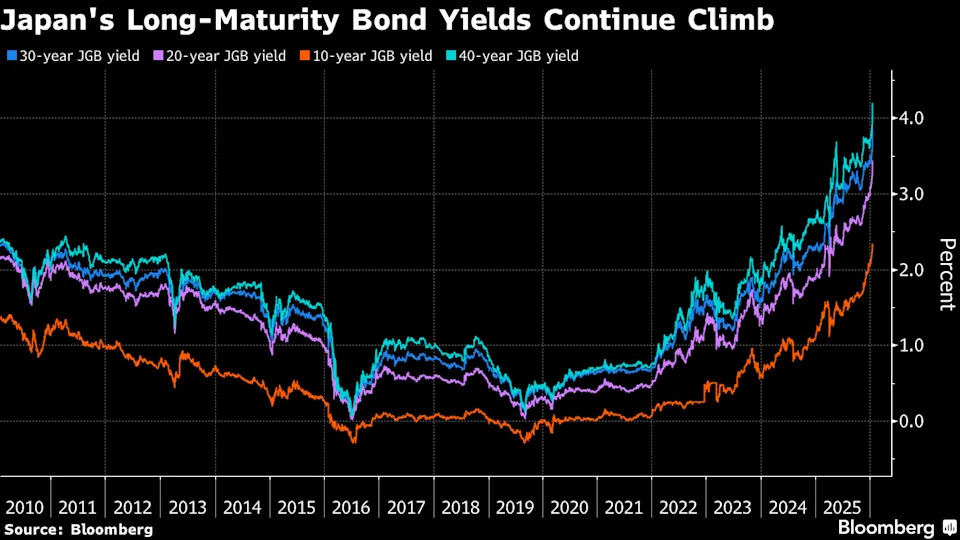
The Japanese bond market experienced a significant slump, with yields reaching record highs, as the 40-year rate surpassed 4% for the first time since its 2007 debut. This surge, driven by investor skepticism over Prime Minister Sanae Takaichi’s proposal to cut food taxes without a clear funding source, has led to fears of increased government bond issuance. Since Takaichi’s October appointment, 20- and 40-year yields have risen by about 80 basis points, reflecting broader concerns over government spending and inflation. The volatility in Tokyo has rippled into global markets, impacting US Treasuries and bonds in Australia and New Zealand. Despite the selloff, the higher yields are attracting foreign investors, who now account for 65% of monthly cash JGB transactions. Meanwhile, local insurers sold a record amount of long-term bonds in December, signaling bearish sentiment. As Takaichi calls for a snap election on February 8, the bond market remains a critical indicator of investor confidence, with potential global repercussions if a JGB meltdown intensifies.

Key Points
Summary
In 2025, China recorded a historic $1.2 trillion trade surplus despite U.S. tariff hikes under President Trump, which reduced U.S. orders by a third. This prompted a strategic shift to diversify exports to lower-income markets like South America, Africa, and Southeast Asia. However, Reuters interviews with 14 export salespeople reveal significant challenges behind the impressive figures. New markets often yield smaller, less profitable orders, reducing commissions and increasing financial uncertainty for workers. Sales staff also face heightened stress, longer hours, and health issues like insomnia, as they navigate unfamiliar markets and intense competition. Industrial profits dropped 13.1% year-on-year in November, reflecting economic strain. Experts warn that relying on foreign markets for growth is unsustainable, as weak domestic consumption forces Chinese firms to compete overseas, eroding profits. The pressure on sales agents, coupled with risks like longer payment cycles and client defaults, suggests that replicating 2025’s trade success may be difficult in the future.
Key Points
Summary
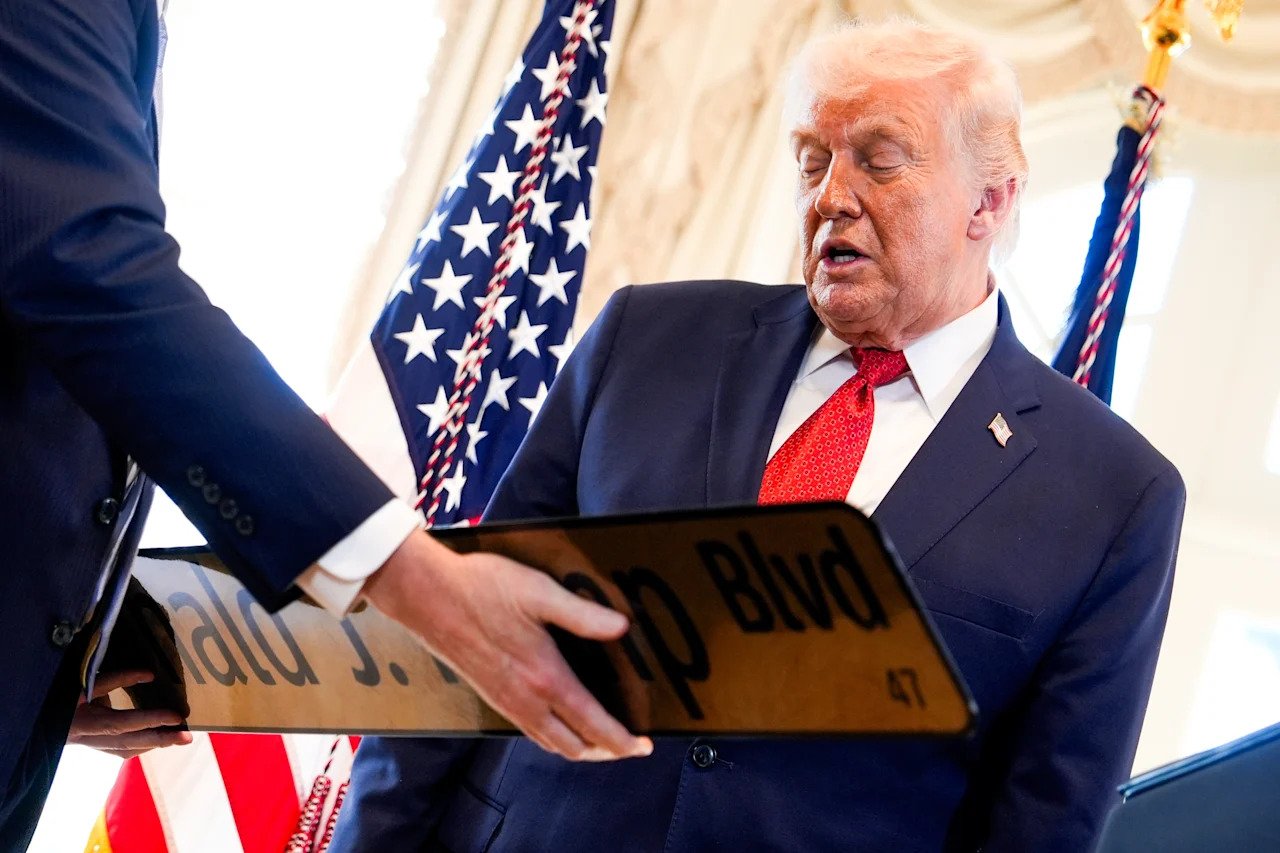
President Donald Trump has tied his pursuit of Greenland to his frustration over not winning the Nobel Peace Prize, as revealed in a letter to Norway’s Prime Minister. Initially citing national security, Trump now appears motivated by personal grievance. In response to European opposition to the Greenland purchase, he announced tariffs of 10% on eight countries—Denmark, Norway, Sweden, France, Germany, the UK, the Netherlands, and Finland—starting February 1, 2026, increasing to 25% by June if unresolved. These nations, already facing US tariffs, criticized the move as damaging to transatlantic ties, with leaders like Denmark’s Mette Frederiksen rejecting blackmail. Economically, Goldman Sachs estimates a minor GDP impact on Europe, while Deutsche Bank warns of potential European retaliation via selling $8 trillion in US assets, risking a weaker dollar. Trump also expressed concern over the US Supreme Court’s delay in ruling on his trade duties, calling it a national security issue. The escalating trade tensions have unsettled global markets, though some analysts believe Europe’s economic resilience may mitigate long-term effects.


