

Key Points
Summary
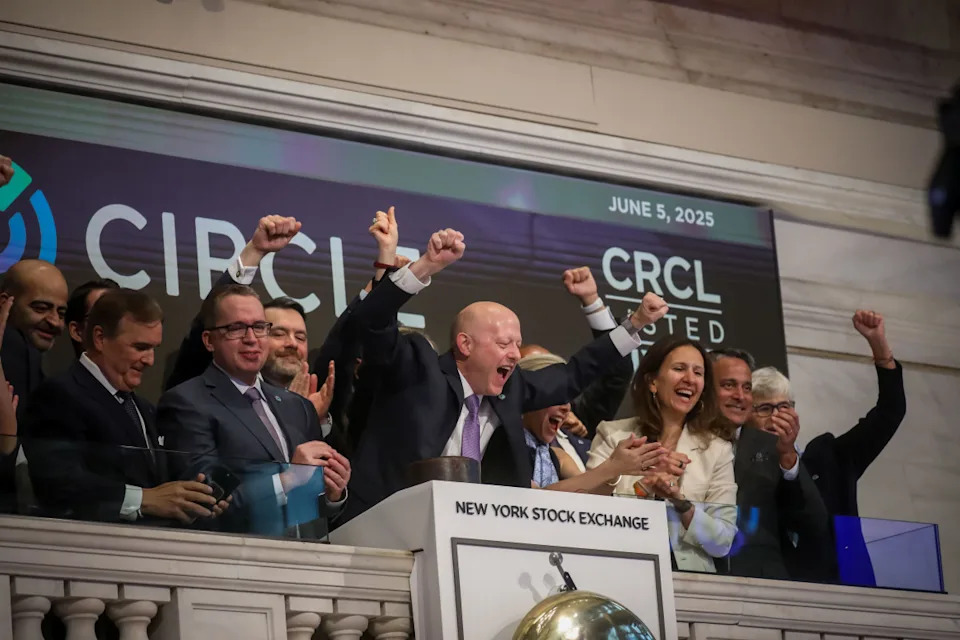
Circle Internet Group (NYSE: CRCL), the company behind the USDC stablecoin, unveiled Arc, a new layer-1 blockchain focused on stablecoin applications, on August 12, 2025. Arc, compatible with the Ethereum Virtual Machine, uses USDC as its native gas token and aims to support enterprise-grade stablecoin payments and capital markets solutions. A public testnet is slated for this fall, with full integration into Circle’s platform and interoperability with numerous partner blockchains. Alongside this launch, Circle reported impressive Q2 2025 earnings, with a 53% year-over-year revenue increase to $658 million and a 52% rise in adjusted EBITDA to $126 million. However, a net loss of $482 million was recorded due to non-cash charges tied to its recent IPO. Following its public debut on the NYSE in June 2025, Circle’s stock surged 6.5% in pre-market trading to $172.01. CEO Jeremy Allaire highlighted the company’s sustained growth and adoption across diverse use cases. With a market cap of $65 billion, Circle holds a significant 24% share of the stablecoin market since its founding in 2013.

Key Points
Summary
Do Kwon, the South Korean cryptocurrency entrepreneur behind Terraform Labs, is set to plead guilty to charges of conspiracy to defraud and wire fraud in a U.S. court. Kwon, who developed the TerraUSD stablecoin and Luna token, is accused of misleading investors by falsely claiming a computer algorithm stabilized TerraUSD’s value in 2021, when he allegedly orchestrated secret purchases to prop up its price. This deception contributed to the $40 billion collapse of both currencies in 2022, impacting retail and institutional investors. Initially pleading not guilty to a nine-count indictment, Kwon now faces sentencing following his plea. In 2024, he settled with the SEC for $4.55 billion, including an $80 million fine and a crypto transaction ban. Detained since his extradition from Montenegro, Kwon is among several crypto figures charged amid the 2022 digital token market crash.

Key Points
Summary
Coinbase Global, Inc. (COIN), a leading cryptocurrency exchange with a $79.8 billion market cap, operates a robust platform for digital assets, catering to consumers, institutions, and developers. Over the past 52 weeks, COIN’s stock has surged 61.5%, far outpacing the S&P 500’s 20.1% gain, and year-to-date, it’s up 25.1% against SPX’s 8.6%. However, its Q2 earnings on July 31 disappointed, with revenue of $1.5 billion missing estimates despite a 3.3% year-over-year increase, driven by a drop in transaction revenues. Adjusted EPS plummeted 89.1% to $0.12, triggering a 16.7% share price decline. Analysts project a 37.5% EPS drop for the fiscal year to $4.75, though COIN’s earnings history shows inconsistency. The stock holds a "Moderate Buy" consensus from 31 analysts, with a mean price target of $371.33 (19.6% upside) and a high of $510 (64.2% upside), despite a recent downgrade by Compass Point to "Sell." While COIN has lagged behind the First Trust SkyBridge Crypto ETF’s gains, its long-term potential in the crypto space remains a focal point for investors.
Key Points
Summary
Bitcoin started the week trading near its record high of over $123,000, with a recent value above $120,000, reflecting a nearly 30% rise this year. This surge boosted shares of crypto-related companies, including MicroStrategy (MSTR), the largest corporate holder of Bitcoin, Coinbase (COIN), and Robinhood Markets (HOOD), which saw premarket gains of nearly 3%, over 3%, and almost 2% respectively. A significant catalyst for this uptick was President Donald Trump’s executive order last week, which allows workers to invest in cryptocurrencies and alternative assets through their 401(k) retirement plans. Trump emphasized that the order aims to reduce regulatory burdens and litigation risks, urging the Labor Department and SEC to support employers in offering such investments. As of Friday’s close, MicroStrategy’s stock had risen by about a third year-to-date, Coinbase by 21%, and Robinhood reached record highs in 2025. Ether also traded near $4,200, underscoring the broader momentum in the crypto market.
Key Points
Summary
Tron, formerly SRM Entertainment, has undergone a dramatic transformation from a failing theme park merchandise developer in Winter Park, Florida, to a crypto-focused holding company aiming to amass TRX, the native token of Justin Sun’s Tron blockchain. This pivot, inspired by MicroStrategy’s Bitcoin strategy, involves raising capital through stock, debt, and warrants to invest in TRX and related ventures. A reverse merger with Sun’s Tron platform will facilitate U.S. trading and explore digital collectibles linked to theme park IP. Despite a remarkable 615% 52-week return, far surpassing the S&P 500’s 20% gain, Tron’s financials reveal significant risks, with negative earnings, a high price-sales ratio of 28.34x, and a return on equity of -78.96%. The Tron blockchain’s low-cost, high-throughput capabilities position it well for entertainment and digital projects, but the stock’s speculative nature is heightened by a lack of analyst coverage, forcing investors to rely on market sentiment and crypto trends. With a market cap of $126 million and a recent price near $6.70, Tron’s aggressive rebrand unfolds on a volatile crypto stage, where regulatory shifts and sentiment can drive sharp swings.

Key Points
Summary
Shiba Inu (SHIB), the second-largest meme coin with a market cap of about $7 billion, has seen a significant decline of 43% in 2025, dropping out of the top 20 cryptocurrencies, while Dogecoin, the top meme coin, fell 36%. This contrasts with the broader crypto market's gains, including Bitcoin's 23% rise and XRP's 44% increase. Despite its current downturn, Shiba Inu has a history of dramatic bull runs, such as a 370% surge in early 2024 and a 39% jump in November 2024, often following Bitcoin's trends. The article suggests that the current low interest in meme coins could be a buying opportunity for risk-tolerant investors. However, it emphasizes Shiba Inu's lack of fundamental value and high risk, advising to only invest disposable funds. While meme coins remain a popular speculative play, the potential for another rally exists, though there's also a chance they could fade over time. Investors are cautioned to keep positions small and approach with caution, as Shiba Inu is more of a fun diversion than a serious investment.
Key Points
Summary
The article "3 Reasons to Buy Bitcoin Before 2026" highlights Bitcoin's growing appeal as an investment in 2025, driven by evolving market dynamics. It emphasizes three key factors: first, regulatory progress is clarifying the legal framework for cryptocurrencies, with initiatives like the Trump administration’s Strategic Bitcoin Reserve fostering investor confidence. Second, Bitcoin’s fixed supply of 21 million coins positions it as "digital gold," an attractive inflation hedge, especially as its supply growth outpaces gold mining, according to investor Cathie Wood. Third, clearer rules are drawing institutional investors, evidenced by the rapid growth of Bitcoin ETFs like the iShares Bitcoin Trust, which manages $85 billion. Despite skepticism from figures like Warren Buffett, who see no intrinsic value in Bitcoin, the article suggests a small stake in a diversified portfolio could be beneficial. It advises caution, recommending investors limit exposure in case bearish predictions prevail, while noting the potential for significant gains if bullish trends continue. The piece underscores the importance of acting before 2026 to capitalize on these emerging opportunities.

Key Points
Summary
James Howells, a computer engineer from Newport, Wales, has ended his 12-year struggle to recover a hard drive with 8,000 Bitcoin, now worth around $890 million, lost in a landfill in 2013 after being accidentally discarded by his ex-girlfriend. Despite persistent efforts to search the site, including a multi-million dollar offer to purchase it, Newport City Council has denied access and demanded nearly $149,000 in legal fees from failed court attempts. Howells’ legal claims, including a High Court bid for access or $630 million in compensation, were dismissed, and his appeals, prepared with AI assistance, were also rejected. Accusing the council of “financial coercion” for tying his offer to unrelated debts, Howells has decided to move on. Instead of continuing the search, he is launching Ceiniog Coin (INI), a new cryptocurrency backed by the publicly verifiable value of his lost Bitcoin wallet, positioning it as a store-of-value token. This shift marks the end of a costly and frustrating chapter for Howells, as reported by TheStreet on August 8, 2025.
Key Points
Summary
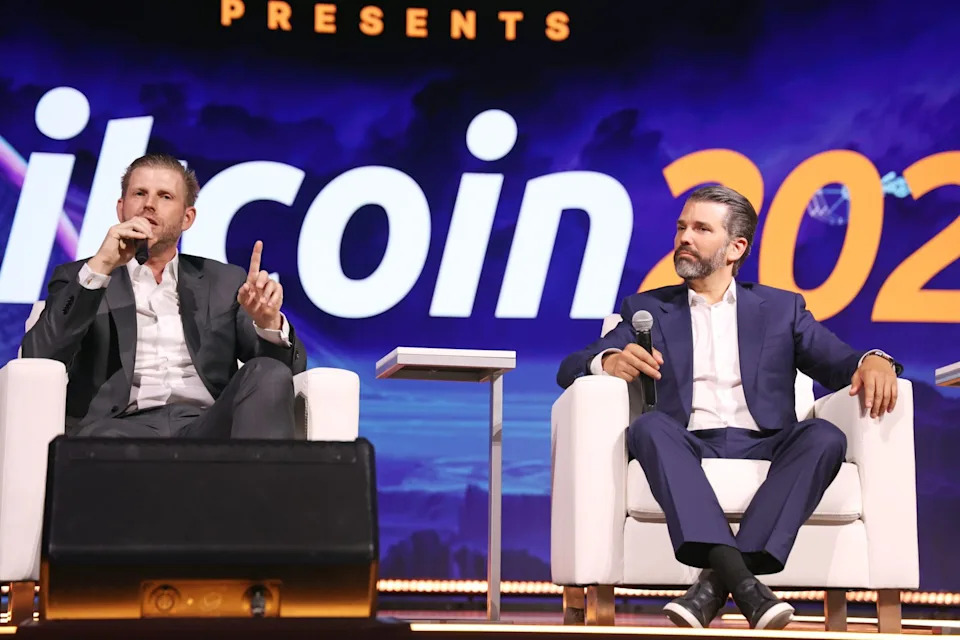
World Liberty Financial, a Trump family business, is set to launch a publicly traded crypto treasury company, combining its WLFI token and cash, with a goal to raise $1.5 billion, according to investor details reported by Fortune. Eric Trump and Donald Trump Jr. are slated to join the board of this NASDAQ-listed shell firm. This move expands the Trump family’s crypto ventures, which already include the successful WLFI token ($550 million in sales) and a stablecoin, USD1. The plan mirrors a growing trend of digital asset treasury companies, pioneered by Michael Saylor’s Strategy (formerly MicroStrategy), which holds over $72 billion in Bitcoin. Similar firms now exist for Ethereum and other cryptocurrencies, while Trump Media recently acquired $2 billion in Bitcoin. Advocates argue these companies provide traditional investors access to digital assets, but critics warn of potential collapse as the crypto boom fades. The Trump family’s involvement in blockchain extends beyond World Liberty, with personal memecoins and a Bitcoin mining venture backed by Eric and Donald Jr. Spokespersons for the family and World Liberty declined to comment on the treasury company plans.
Key Points
Summary
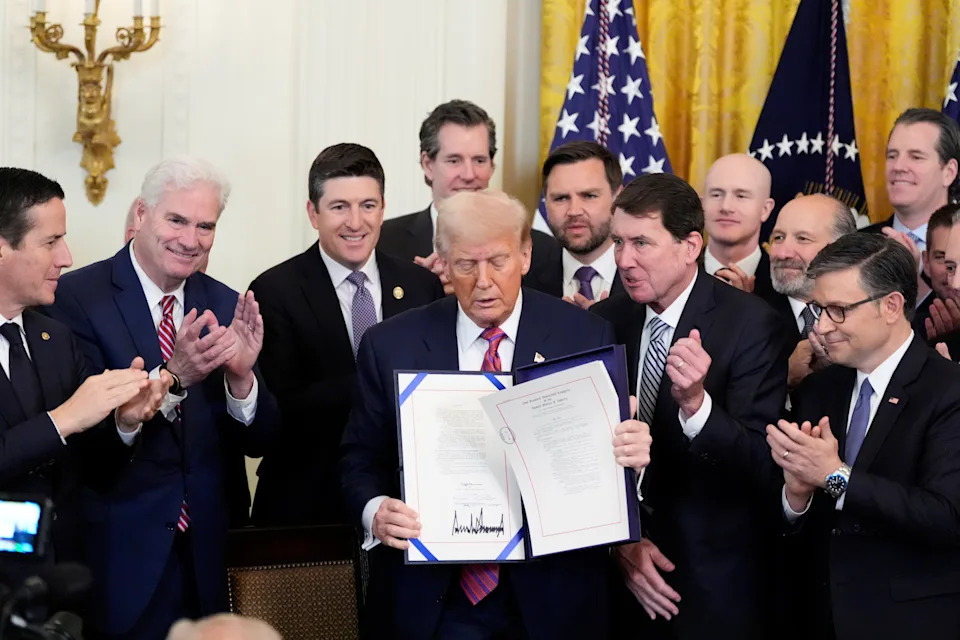
Ethereum (ETH-USD) soared past $4,000 early Friday, joining a robust altcoin rally led by Ripple's XRP (XRP-USD) and Chainlink's LINK (LINK-USD), which gained up to 8% and 11%, respectively. Ripple's surge followed its $200 million acquisition of Rail, a stablecoin payments platform, aimed at enhancing global payment solutions. Chainlink announced the launch of its Chainlink Reserve to bolster LINK token holdings through institutional and on-chain fees. Meanwhile, Bitcoin (BTC-USD) hovered near $116,500, buoyed by President Trump’s executive order promoting cryptocurrencies in retirement accounts and the signing of the GENIUS Act for stablecoin regulation. Other legislative efforts, like the Clarity and Anti-CBDC Acts, signal a thawing of Washington's stance on crypto. This comes amid growing corporate adoption of bitcoin treasury strategies and successful IPOs like Circle’s, highlighting the increasing mainstream acceptance of digital assets.

Key Points
Summary
Global risk appetite surged on Friday, driving gains in cryptocurrencies, equities, and gold futures, while oil prices headed for their steepest weekly decline since June, dropping over 4% due to rising US inventories and weak Chinese import data. The total crypto market cap increased by 3% to $3.76 trillion, with altcoins like Ether (+7.3%), XRP (+12%), Solana (+4.7%), and Dogecoin (+8.8%) leading the rally, though Bitcoin lagged with a modest 1.9% rise to $116,781. Bitcoin demand appears to be cooling, with market sentiment shifting from euphoria to caution, evidenced by a 25% drop in spot Bitcoin ETF inflows, reduced network activity, and lower transaction fees. BTC remains stuck between $112,000 support and $120,000 resistance, while options markets show increased hedging below $100,000. In broader markets, Asian indices like the MSCI Asia Pacific Index (+0.5%) and Japan’s Nikkei-225 (+2.3%) gained, buoyed by eased US-Japan trade tensions. Analysts note the crypto rebound aligns with stock market optimism, but warn of potential stagnation for Bitcoin amid a summer lull.
Key Points
Summary
Binance, the leading global cryptocurrency exchange, is collaborating with Spanish bank BBVA to allow customers to store their assets outside the exchange, according to a Financial Times report. BBVA is one of a limited number of independent custodians supporting Binance in this initiative, as confirmed by sources familiar with the arrangement. This step comes at a time when Binance is under intense regulatory pressure worldwide, highlighted by a $4.3 billion penalty imposed by U.S. authorities in February for breaches in anti-money laundering and sanctions laws. Additionally, Binance’s founder, Changpeng Zhao, received a four-month prison sentence related to these lapses. The partnership with BBVA is seen as an effort to enhance investor trust in the safety of funds, especially in the aftermath of the 2022 FTX collapse, which shook the crypto industry. Neither BBVA nor Binance provided immediate comments to Reuters on the report. This development reflects broader trends in the cryptocurrency sector, where exchanges are seeking to address security concerns and regulatory compliance to maintain credibility and protect user assets amidst ongoing challenges.

Key Points
Summary
Bitcoin (BTC) is trading around $115,000 in Asia, up 1% in the last 24 hours, as it navigates a post-all-time-high correction with low volume and weak conviction. Glassnode identifies BTC in a low-liquidity “air gap” between $110,000 and $116,000, a critical zone that could either support accumulation or trigger deeper declines if demand falters. Short-term holder profitability has dropped from 100% to 70%, and negative ETF flows, including a 1,500 BTC outflow, reflect cautious sentiment, alongside reduced leverage in derivatives markets. Ethereum (ETH) is up 2% at just under $3,600 but faces significant sell pressure and bearish signals, risking a 25–35% drop by September. The broader crypto market, tracked by the CoinDesk 20 Index (up 1.69%), remains fragile, with analysts noting a lack of confidence in majors like BTC and ETH. Market makers suggest a sideways or downward trend unless volume-driven strength emerges. Meanwhile, external factors like U.S. semiconductor tariffs and Fed rate cut speculations impact related markets, with gold flat at $3,372.11 and Asia-Pacific indices like the Nikkei 225 showing mixed responses. The crypto market’s next direction hinges on whether buyers can establish a base in this low-volume zone or if a reset toward $110,000 is needed.

Key Points
Summary
Bitcoin's volatility continues to plummet, with the 30-day implied volatility index (BVIV) reaching a multi-year low of 36.5% on Wednesday, a level last seen in October 2023 when BTC was below $30,000. Despite U.S. economic data hinting at stagflation, options traders are not seeking hedges, keeping implied volatility suppressed. This trend mirrors patterns in the stock market, where the VIX index for the S&P 500 has also declined after a brief spike. Bitcoin's price has risen significantly from $70,000 to over $110,000 since November, yet its volatility has trended downward, marking a shift from historical patterns where price and volatility moved in tandem. Analysts attribute this change to the growing use of structured products, such as selling out-of-the-money call options. This evolving dynamic suggests Bitcoin is adopting Wall Street-like behavior, where implied volatility often decreases during steady bull runs, reflecting a transition from its previously erratic market nature to a more mature asset class.

Key Points
Summary
Bitcoin (CRYPTO: BTC) has seen extraordinary price surges, reaching highs near $115,500 recently, with gains of 88% in the past year and over 40,000% in a decade. Despite these jumps, the article argues it’s not too late for new investors. Bitcoin’s design, with a fixed supply of 21 million coins and halving mining rewards every four years (next in 2028), ensures scarcity and potential value growth against fiat currencies. The mining process, akin to gold extraction, demands significant resources, and rewards will eventually shift to transaction fees by around 2140 when new coin creation ends. Lost coins further reduce the effective supply, reinforcing value through supply-demand dynamics. With growing institutional interest and Bitcoin ETFs, the cryptocurrency appears set for a sustained wealth-building trajectory. However, the article notes that while Bitcoin holds promise, The Motley Fool’s Stock Advisor team highlights other investment opportunities, suggesting alternatives with potentially higher returns. Investors are encouraged to consider Bitcoin’s long-term potential against other market options.

Key Points
Summary
Opendoor Technologies (NASDAQ: OPEN), a leader in the iBuying industry, recently experienced a dramatic stock surge, quadrupling in value over a month, fueled by meme stock traders and bullish predictions from hedge fund manager Eric Jackson. Despite a 20% drop after its Q2 earnings report, the stock remains up for the year. The company outperformed Q2 expectations with $1.57 billion in revenue and a slight loss of $0.01 per share, achieving its first adjusted EBITDA profit in over three years. However, weaker-than-expected Q3 guidance of $838 million in revenue, against analyst hopes of $1.2 billion, pressured the stock, reflecting a transition to a platform model and a slow real estate market. Management remains cautious, expecting persistent housing market challenges with high mortgage rates and low sales volumes. Homebuying volume also dropped significantly, with only 1,757 homes purchased in Q2. Despite these hurdles, Opendoor's resilience in a tough environment hints at potential upside if market conditions, such as interest rates, improve. The stock remains volatile, and investors are advised to approach with caution, recognizing both the risks and the disruptive potential of this real estate tech player.


